


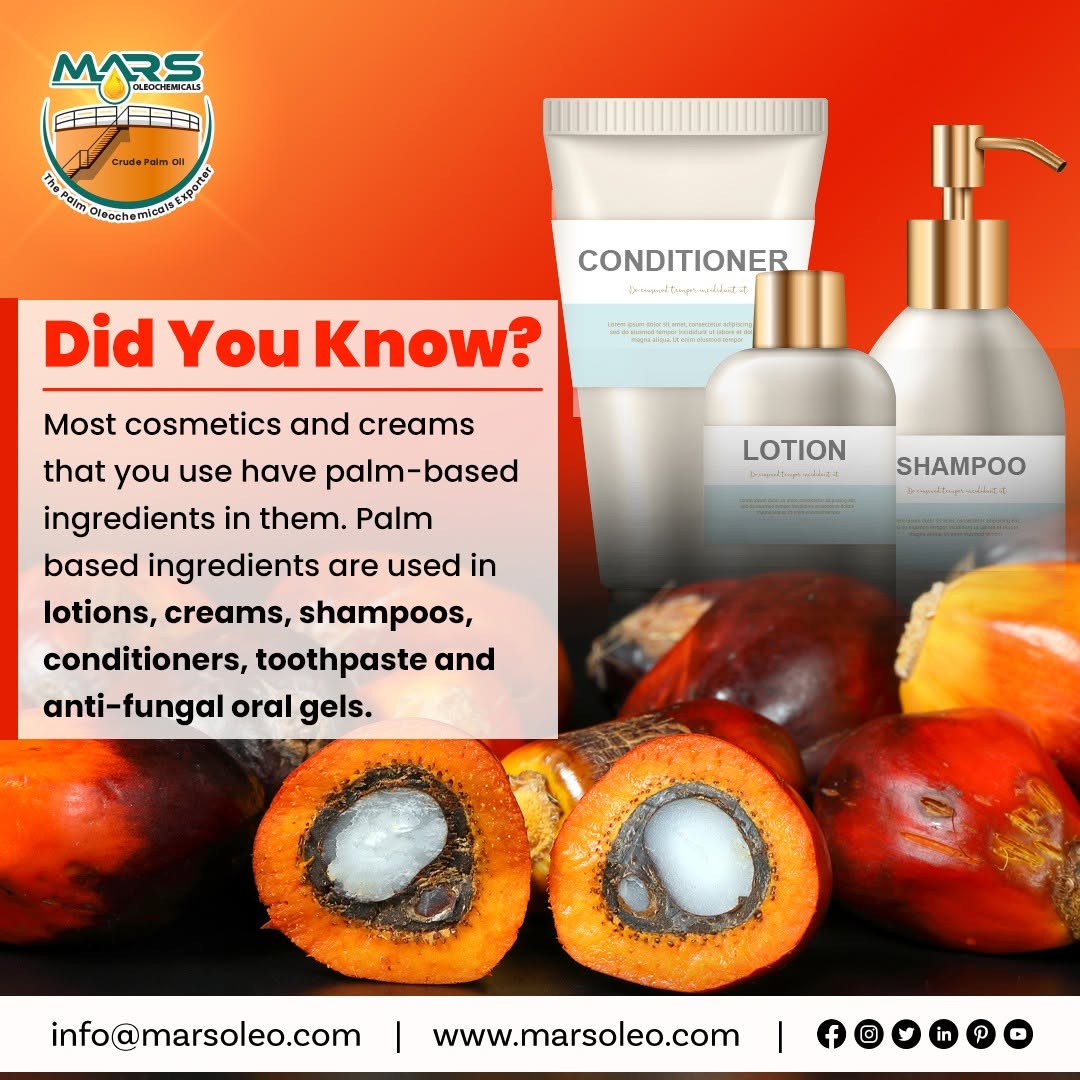
Personal-care formulators generally select ingredients according to the function required in the finished product rather than simply because an ingredient is palm-derived. Palm and palm-kernel feedstocks can be converted into glycerine, fatty acids, fatty alcohols, esters and surfactants, but each category performs different roles. Selecting the appropriate grade therefore begins with defining whether the formulation needs moisture management, emollience, cleansing, emulsification, viscosity control, structuring or another specific function. This function-led approach differentiates the new page from Mars' existing general cosmetics and personal-care articles.
Glycerin is widely recognised as a humectant that holds and retains moisture in cosmetic products and can also provide skin-conditioning and viscosity-related functionality. Esters such as Isopropyl Myristate can serve as emollients that help soften and smooth the skin while improving spreadability and sensory properties. These ingredients can therefore be considered for lotions, creams and other leave-on formulations when their grade, concentration and regulatory status are appropriate for the intended market.

Palm-derived oleochemicals provide functional ingredients for emulsifying and conditioning personal-care worldwide.
Fatty alcohols perform a different role. Cetyl Alcohol, for example, can contribute emollience, emulsion stability, emulsification and viscosity control in appropriate cosmetic systems. Similar long-chain fatty alcohols are frequently used to build body and consistency in creams, lotions and conditioner-type formulations. Their performance depends on the complete emulsion system, processing conditions and concentration, so they should not be treated as interchangeable simply because they share an oleochemical origin.
Cleansing products require another ingredient family: surfactants. Sodium Laureth Sulfate, for example, provides cleansing and foaming functions and is used in shampoos and other rinse-off systems. Other surfactant classes can be blended to modify foam, viscosity, mildness and cleansing profile. The appropriate ingredient should therefore be selected according to the finished formulation rather than making a general claim that every palm-based ingredient performs the same function. Cosmetic suitability also depends on the actual grade, feedstock, purity, specification and destination-market requirements.
What are palm-derived oleochemicals used for in personal care? Palm-derived oleochemical grades can provide functions including humectancy, emollience, cleansing, emulsification, viscosity control and formulation structure, depending on the specific ingredient and grade.
Which oleochemical is commonly used as a humectant? Glycerin is widely used as a humectant because it helps hold and retain moisture in cosmetic formulations. It is also used in lotions, creams, shampoos and other personal-care products.
Which palm-derived ingredients can provide emollient functionality? Suitable grades of Isopropyl Myristate, Isopropyl Palmitate and certain fatty alcohols can provide emollient or skin-conditioning functionality. Feedstock origin should be confirmed for each commercial grade.
What do fatty alcohols do in creams and conditioners? Fatty alcohols such as Cetyl Alcohol can help provide emollience, viscosity control, emulsification and emulsion stability in suitable creams, lotions and conditioner formulations.
Are all palm oleochemicals suitable for cosmetics? No. Cosmetic suitability depends on the specific ingredient, grade, purity, specification, manufacturing origin, intended use and destination-market requirements.











Home :: Products :: Enquiry :: Contact Us :: Site Map
Copyright All Rights Reserved © 2025. Mars Oleochemicals :: Disclaimer :: Privacy Policy


