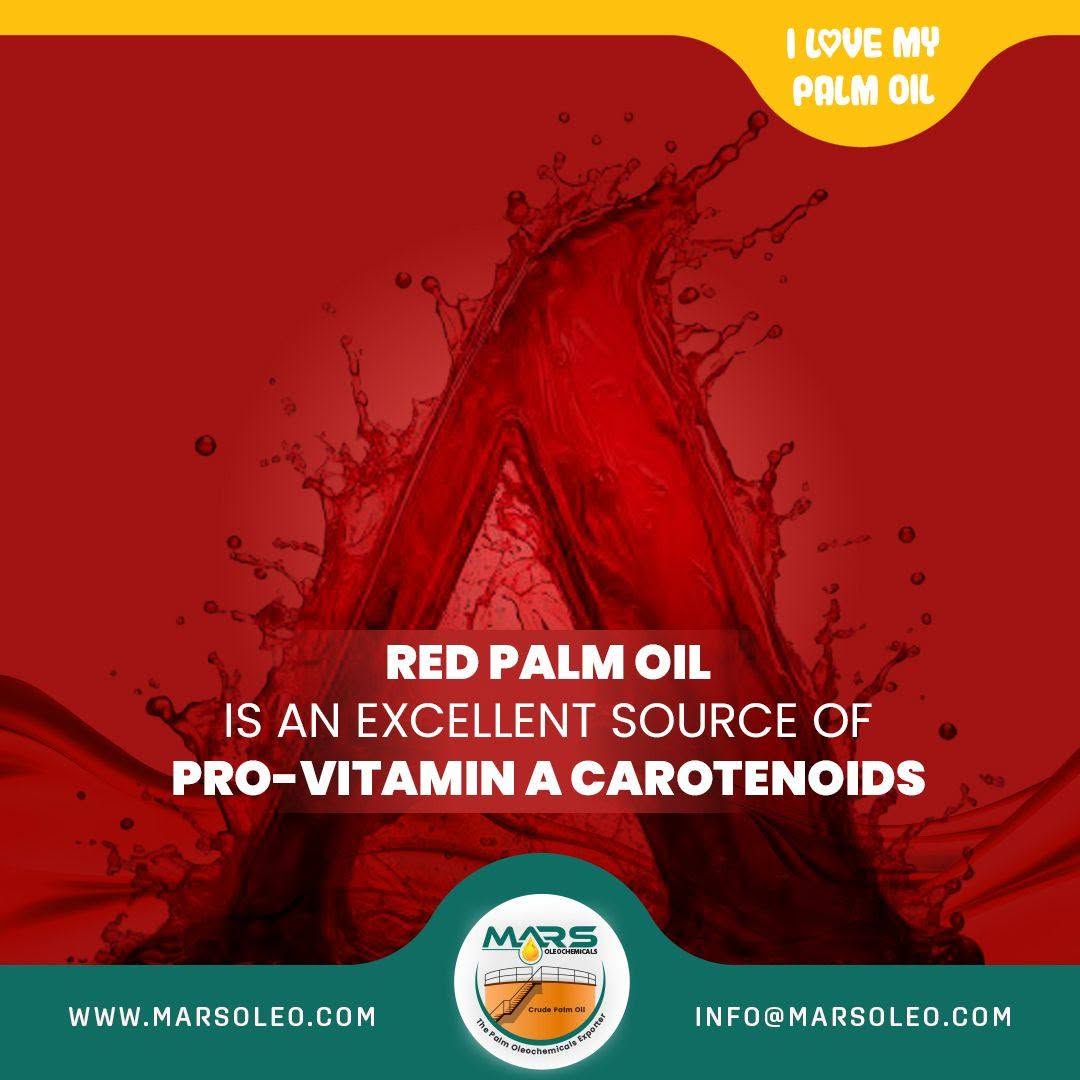
Malaysian red palm oil naturally contains a mixture of carotenoids responsible for its characteristic red-orange colour. Important carotenoids include alpha-carotene and beta-carotene, both of which possess provitamin A activity. These compounds can be converted by the body into vitamin A according to physiological requirements. Research from MPOB identifies alpha- and beta-carotene as major carotenoids naturally present in palm oil.
Conventional palm-oil refining removes much of crude palm oil's natural carotenoid colour. Red palm oil is produced using specialised processing designed to preserve more of these naturally occurring pigments while producing an edible oil. This gives red palm oil its distinctive colour and differentiates it from conventional light-coloured RBD palm oil. Mars' current red-palm-oil article describes this specialised refining approach.

Malaysian red palm oil provides provitamin A carotenoids that the body converts into vitamin A.
Certain carotenoids act as provitamin A compounds, meaning the body can convert them into active vitamin A. Vitamin A has established physiological roles in normal vision and immune function. Therefore, it is more precise to say that red palm oil provides provitamin A carotenoids than to directly market the oil itself as “boosting immunity” or treating eye conditions. MPOB likewise describes beta-carotene as a precursor to vitamin A and notes vitamin A's roles in vision and immune function.
Red palm oil can be used in cooking oils, margarines, spreads, shortening, bakery products, sauces, soups, salad dressings and selected nutritional formulations. Its naturally occurring colour and carotenoid content can also provide differentiation in suitable food products. Exact carotenoid levels vary according to raw material, processing, storage and product specification, so quantitative commercial claims should be supported by the relevant technical specification or Certificate of Analysis.
What are provitamin A carotenoids? Provitamin A carotenoids are carotenoid compounds that the human body can convert into vitamin A. Beta-carotene, alpha-carotene and beta-cryptoxanthin are examples.
Does red palm oil contain beta-carotene? Yes. Beta-carotene is one of the principal naturally occurring carotenoids in red palm oil and possesses provitamin A activity.
Does red palm oil contain alpha-carotene? Yes. Alpha-carotene is another important naturally occurring carotenoid in red palm oil and also has provitamin A activity.
Can the body convert red palm oil carotenoids into vitamin A? Yes. Certain carotenoids, especially beta-carotene and alpha-carotene, can be converted by the body into vitamin A.
Why is Malaysian red palm oil red? Its red-orange colour comes primarily from naturally occurring carotenoids retained through specialised processing.
Does vitamin A support normal vision? Yes. Vitamin A has an established physiological role in normal vision. It also contributes to normal immune function. This does not mean red palm oil should be described as treating eye or immune conditions.
How many carotenoids are in red palm oil? The amount varies by grade and processing. MPOB's consumer material reports about 8.7 mg of carotenoids in a 13 g tablespoon of the red palm oil referenced, while research on commercial red palm olein reported approximately 665 ppm carotene on average.
Does red palm oil also contain vitamin E? Yes. Malaysian red palm oil naturally contains vitamin E compounds, including tocopherols and tocotrienols.
What is Malaysian red palm oil used for? Applications include cooking oils, margarine, spreads, shortening, bakery products, sauces, soups, salad dressings and selected nutritional formulations.
Is red palm oil the same as conventional RBD palm oil? No. Conventional refining removes much of palm oil's natural carotenoid colour, while red palm oil uses specialised processing designed to retain more carotenoids.











Home :: Products :: Enquiry :: Contact Us :: Site Map
Copyright All Rights Reserved © 2025. Mars Oleochemicals :: Disclaimer :: Privacy Policy