


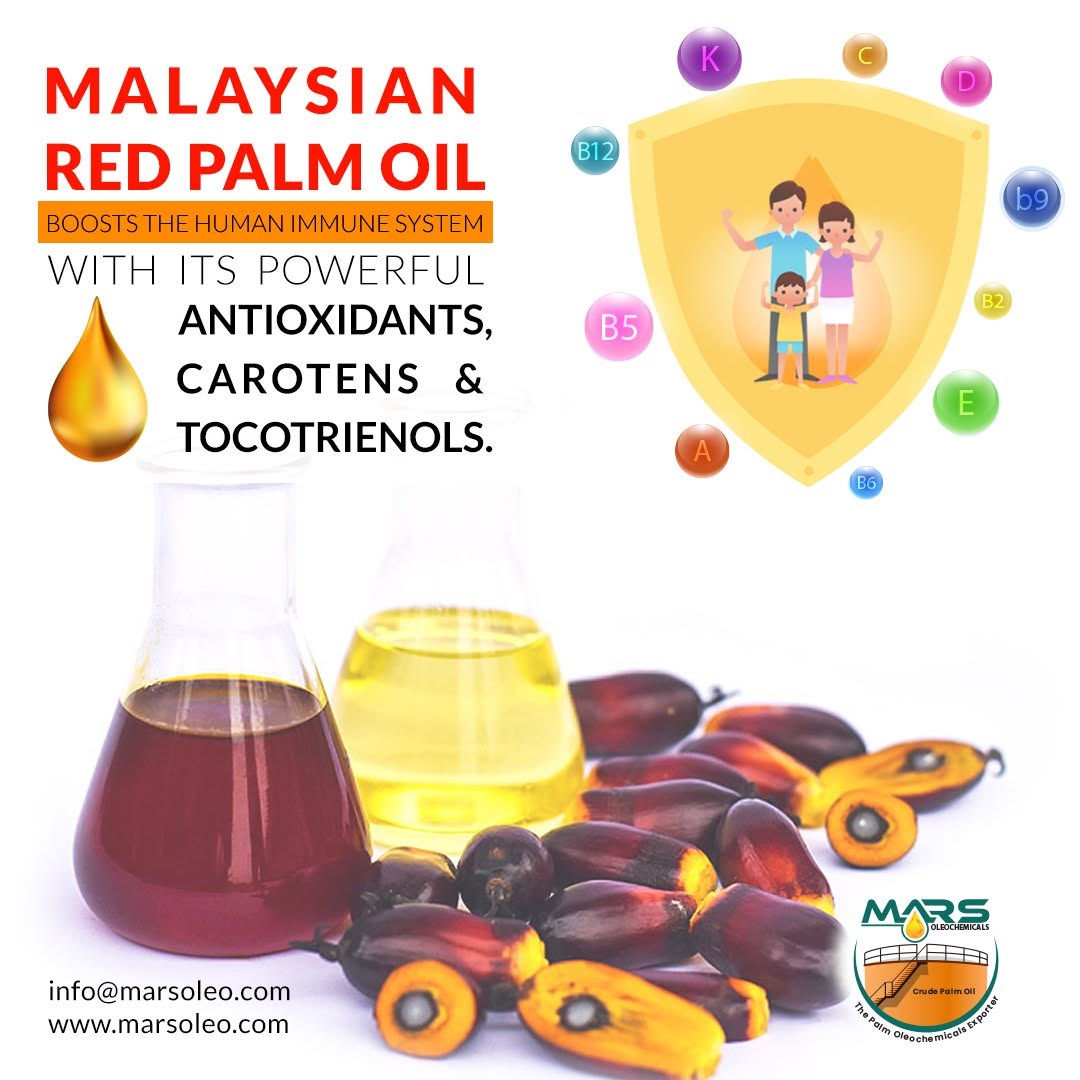
Malaysian red palm oil is a distinctive vegetable oil obtained from the fleshy mesocarp of oil palm fruit (Elaeis guineensis). Its characteristic orange-red appearance comes from naturally occurring carotenoid pigments, particularly alpha-carotene and beta-carotene. Unlike conventional refined, bleached and deodorized (RBD) palm oil, red palm oil is produced using specialized refining processes designed to preserve more of its natural phytonutrients. These include carotenoids, vitamin E tocopherols and tocotrienols, together with smaller amounts of other naturally occurring components. The nutritional composition of red palm oil has attracted attention from food scientists and researchers investigating plant-derived micronutrients. Malaysia's established palm oil industry provides an important foundation for the production, processing and scientific evaluation of palm-derived vegetable oils.
One of the notable nutritional characteristics of red palm oil is its content of provitamin A carotenoids, especially alpha-carotene and beta-carotene. These compounds can be converted by the human body into vitamin A, an essential nutrient involved in normal vision, immune function, growth and cellular development. Research has investigated red palm oil as a dietary source of provitamin A, including its possible contribution to improving vitamin A status in populations experiencing inadequate intake. A systematic review of randomized controlled trials reported improvements in certain vitamin A measurements, although results varied between studies. Importantly, the established role of vitamin A in normal immune function does not mean that consuming red palm oil directly boosts immunity, prevents infections or treats medical conditions. Any commercial nutritional claim must accurately reflect the finished product's verified composition and applicable regulations.

Red palm oil naturally contains provitamin A carotenoids and vitamin E compounds with antioxidant properties.
Red palm oil also contains vitamin E compounds, including tocopherols and tocotrienols, which are recognized for their antioxidant characteristics. Tocotrienols are members of the vitamin E family and differ structurally from tocopherols through their unsaturated side chains. These compounds, together with naturally occurring carotenoids, contribute to the distinctive phytonutrient composition of red palm oil. Researchers continue to examine their biological activity and potential nutritional applications. However, antioxidant activity observed in laboratory studies should not automatically be interpreted as proof that consuming red palm oil prevents chronic disease. Vitamin E and carotenoid concentrations can vary according to the raw material, refining method, heat exposure and storage conditions. Red palm oil also contains saturated fatty acids, making its overall dietary contribution dependent on the broader food and nutritional context.
Red palm oil has applications in selected food formulations where its characteristic color, carotenoid content and edible fat properties are desirable. Suitable food-grade products may be considered for cooking oil blends, sauces, spreads, margarine, bakery products and specialized food ingredients, depending on processing and formulation requirements. Manufacturers should evaluate the oil's carotenoid concentration, vitamin E content, free fatty acid level, peroxide value, sensory properties and relevant food safety documentation before use. Mars Oleochemicals Sdn. Bhd. is a Malaysian exporter of palm oil and palm-derived products, supporting international interest in Malaysia's palm oil industry. Businesses researching palm-based vegetable oils and specialized product applications can explore visiting our website at www.marsoleo.com For product requirements, technical documentation, commercial information and international export inquiries, please email us at info@marsoleo.com.for information about the company's product portfolio and commercial inquiries.
What is Malaysian red palm oil, and why is it red? Malaysian red palm oil is an edible vegetable oil produced from oil palm fruit using specialized refining processes that preserve substantial amounts of naturally occurring carotenoids. Alpha-carotene and beta-carotene are major pigments responsible for its distinctive orange-red color. Red palm oil also retains vitamin E compounds, including tocopherols and tocotrienols.
Does red palm oil naturally contain vitamin A and vitamin E? Red palm oil contains provitamin A carotenoids, including alpha-carotene and beta-carotene, which the body can convert into vitamin A. It also naturally contains vitamin E compounds, including tocopherols and tocotrienols. Actual nutrient concentrations vary according to the product grade, refining process and storage conditions.
Can Malaysian red palm oil boost the immune system? Vitamin A contributes to normal immune function, and red palm oil contains carotenoids that can be converted into vitamin A. However, this does not establish that consuming red palm oil directly boosts immunity or prevents infections. Its nutritional contribution depends on the product composition, overall diet and individual nutritional requirements.
What is the difference between red palm oil and conventional refined palm oil? Red palm oil is processed using specialized methods designed to retain more naturally occurring carotenoids and vitamin E compounds. Conventional RBD palm oil undergoes refining that substantially reduces carotenoid pigments, producing a lighter-colored oil. The two products therefore differ in appearance, carotenoid content and certain nutritional characteristics.
What are the main food applications of Malaysian red palm oil? Food-grade Malaysian red palm oil can be used in selected cooking oils, vegetable oil blends, margarine, spreads, sauces, curries, bakery products and specialized food formulations. Product suitability depends on carotenoid content, quality specifications, processing conditions, sensory characteristics and applicable food regulations.











Home :: Products :: Enquiry :: Contact Us :: Site Map
Copyright All Rights Reserved © 2025. Mars Oleochemicals :: Disclaimer :: Privacy Policy


