


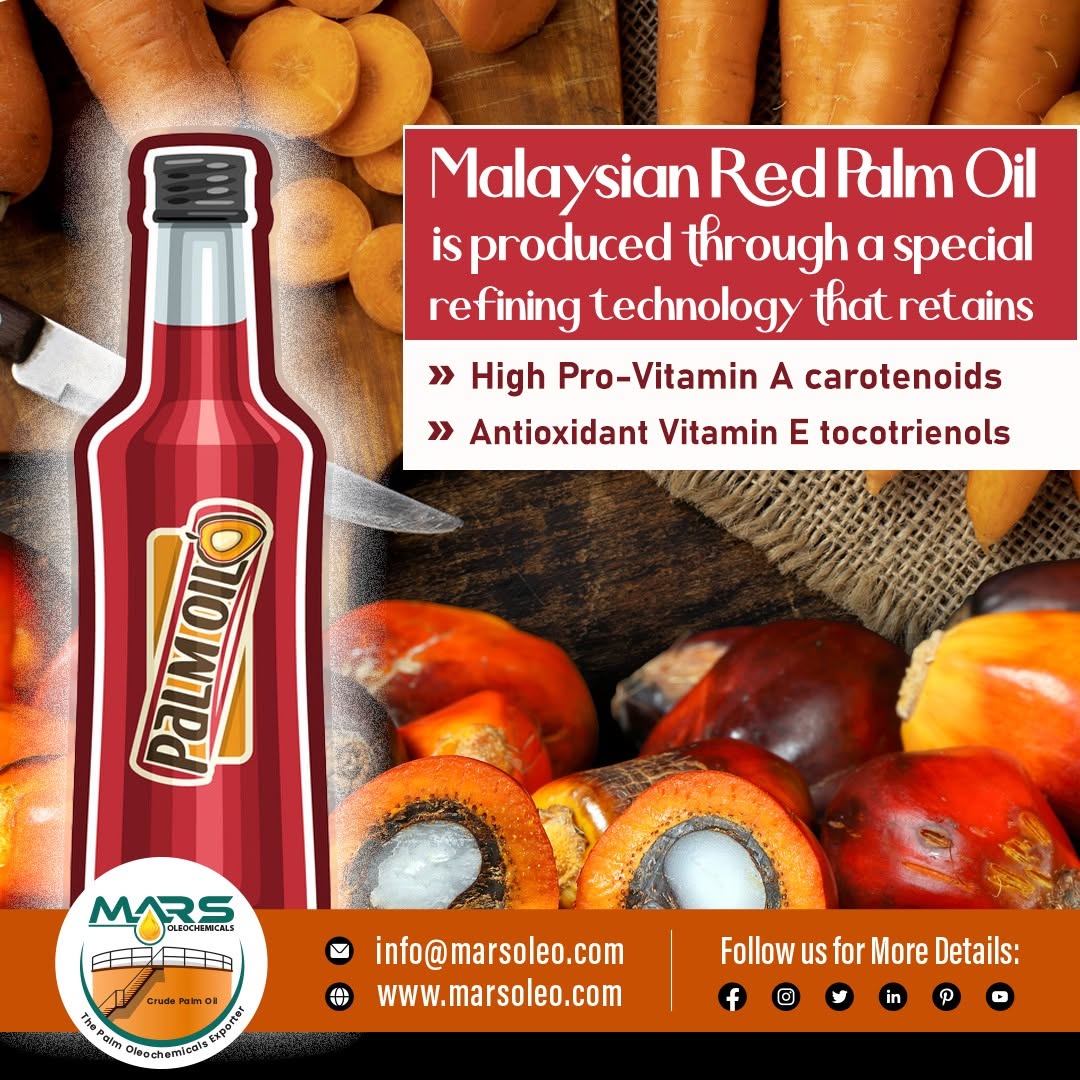
Crude palm oil naturally contains carotenoids responsible for its distinctive orange-red colour, together with vitamin E compounds and other valuable minor constituents. During conventional refining, a significant portion of these natural pigments can be reduced, producing the familiar lighter-coloured refined palm oil. Specialised Red Palm Oil refining technologies are therefore designed to achieve refined-quality oil while preserving a greater proportion of naturally occurring carotenoids, vitamin E and other palm oil phytonutrients.
Red Palm Oil can be produced using carefully controlled pretreatment, deacidification and deodorisation processes that minimise exposure to conditions that may degrade heat-sensitive carotenoids. Molecular distillation and other specialised refining approaches can help remove undesirable crude-oil components while retaining much of the oil's natural red-orange colour and phytonutrient profile. This processing approach differentiates Red Palm Oil from conventionally refined palm oil, where carotenoid concentrations are substantially reduced.

Red palm oil refining preserves carotenoids and vitamin E while reducing unwanted crude-oil components.
In addition to provitamin A carotenoids such as alpha-carotene and beta-carotene, Malaysian Red Palm Oil naturally contains vitamin E compounds, including tocotrienols and tocopherols. Depending on the feedstock and processing method, Red Palm Oil may also retain other naturally occurring minor constituents such as phytosterols, squalene and ubiquinones. These components contribute to the distinctive composition of Red Palm Oil and make it suitable for selected food, nutrition and specialty formulation applications.
The final carotenoid and vitamin E content of Red Palm Oil depends on several factors, including the original crude palm oil quality, refining technology, temperature exposure, storage conditions and packaging. Excessive heat or prolonged processing can gradually reduce carotenoid levels, making controlled production and handling important for maintaining product quality. Manufacturers and formulators should therefore review the current product specification, Technical Data Sheet and batch Certificate of Analysis when a defined carotenoid or vitamin E level is required.
Why is Red Palm Oil red? Red Palm Oil retains substantial amounts of naturally occurring carotenoids, particularly alpha-carotene and beta-carotene. These pigments give the oil its characteristic orange-red colour.
How is Red Palm Oil different from conventional refined palm oil? Conventional refining substantially reduces carotenoid pigments, while specialised Red Palm Oil processing uses modified refining conditions designed to retain considerably more carotenoids and vitamin E.
How much carotenoid can Red Palm Oil contain? Carotenoid levels vary by product and process. Published Malaysian references report approximately 500 to 665 ppm in different refined Red Palm Oil and Red Palm Olein samples, so product-specific specifications should be used.
Does Red Palm Oil contain tocotrienols? Yes. Red Palm Oil naturally contains vitamin E compounds including tocotrienols and tocopherols.
Why is molecular distillation used in Red Palm Oil processing? Molecular distillation enables deacidification and deodorisation under conditions designed to reduce destruction of heat-sensitive carotenoids. Malaysian research reported retention of more than 80% of the original carotenoids and vitamin E.









Home :: Products :: Enquiry :: Contact Us :: Site Map
Copyright All Rights Reserved © 2025. Mars Oleochemicals :: Disclaimer :: Privacy Policy


