


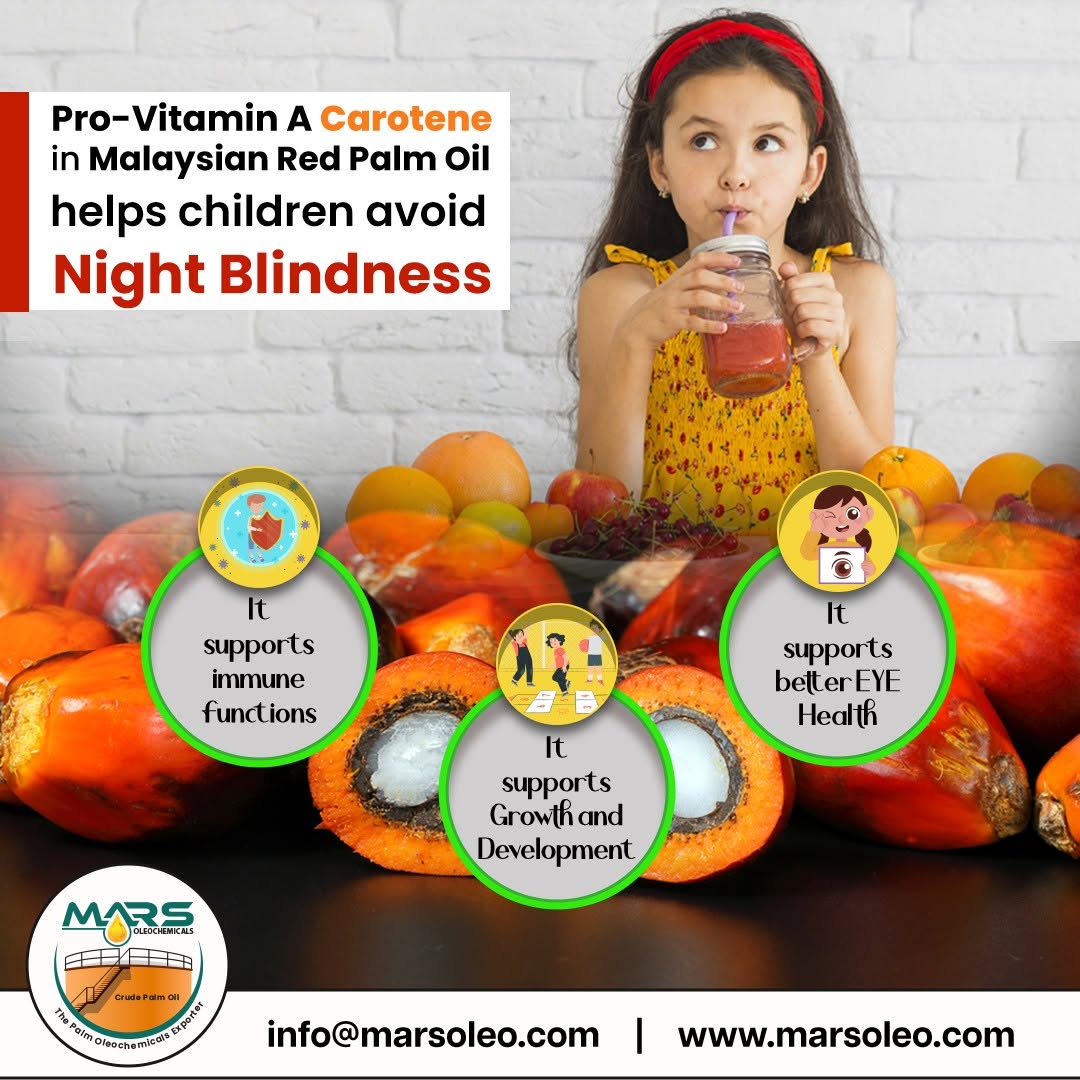
Malaysian red palm oil is naturally rich in carotenoid pigments, particularly beta-carotene and alpha-carotene, which have provitamin A activity. Unlike preformed vitamin A, these plant-derived carotenoids can be converted by the body into vitamin A according to physiological needs. Vitamin A has established roles in normal vision, immune function, growth and development, making adequate dietary intake particularly important during childhood.
Vitamin-A deficiency remains an important nutritional issue in some populations, particularly among young children. WHO states that inadequate vitamin-A intake can lead to deficiency and that one possible manifestation is night blindness. For this reason, public-health programmes use several strategies—including dietary diversification, food fortification and, where recommended, vitamin-A supplementation—to improve vitamin-A status. Red palm oil should therefore be positioned as a food-based source of vitamin-A precursors, not as a replacement for medical or public-health interventions.

Red palm oil provides provitamin A carotenoids supporting adequate dietary vitamin A intake in children.
Red palm oil and red palm olein have been studied as ingredients in nutrient-focused foods for children. A randomised controlled trial in primary-school children found that biscuits containing red palm oil as a beta-carotene source improved vitamin-A status similarly to biscuits fortified with synthetic beta-carotene. More recent Malaysian research has also studied red-palm-olein-enriched biscuits in vitamin-A-deficient schoolchildren, finding increased provitamin-A carotenoid levels and other nutritional changes.
The nutritional value of red palm oil can be incorporated into suitable foods including bakery products, biscuits, spreads, cooking oils, sauces and specialised nutrition formulations. Its natural orange-red colour also provides useful visual differentiation in food products. Formulators should verify the actual carotenoid concentration, stability and regulatory suitability of each commercial grade because carotenoid levels can vary with processing, storage conditions and product specification.
Does red palm oil contain vitamin A? Red palm oil contains provitamin A carotenoids, particularly beta-carotene and alpha-carotene. The body can convert these carotenoids into vitamin A; they are not the same as preformed vitamin A.
Why is vitamin A important for children? Vitamin A contributes to normal vision, immune function, growth and development. Adequate intake is therefore important throughout childhood.
Can vitamin-A deficiency cause night blindness? Yes. Night blindness is a recognized visual manifestation of vitamin-A deficiency, particularly in populations where deficiency is a public-health problem.
Does red palm oil prevent night blindness? Red palm oil provides provitamin A carotenoids that can contribute to vitamin-A intake. It should not be described as independently preventing or treating night blindness.
Has red palm oil been studied in children's nutrition? Yes. Randomised studies have investigated red palm oil and red palm olein in foods such as biscuits for schoolchildren, with several studies reporting improvements in vitamin-A-related nutritional markers.










Home :: Products :: Enquiry :: Contact Us :: Site Map
Copyright All Rights Reserved © 2025. Mars Oleochemicals :: Disclaimer :: Privacy Policy


