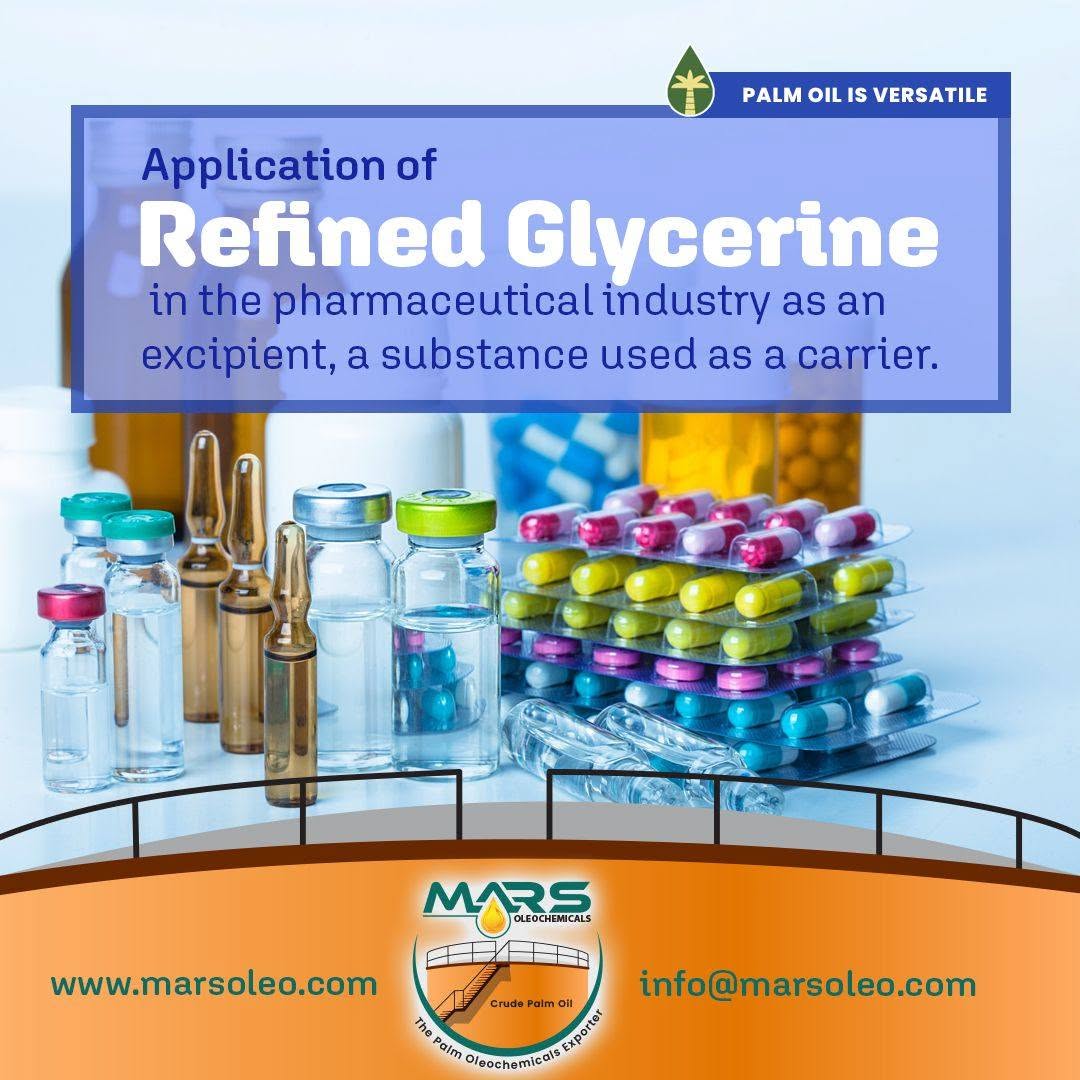
Refined glycerine, also known as glycerol or glycerin, is a clear, viscous and water-miscible material used in selected medicinal formulations. In pharmaceuticals, an excipient is a component other than the active substance, included for a specific purpose such as processing, delivery, stability, texture or product performance.
Glycerine may function as a solvent or formulation vehicle that helps dissolve, disperse or carry compatible ingredients. Its hygroscopic properties also support moisture management in suitable liquid and semisolid products. The precise function, concentration and suitability depend on the dosage form, route of administration and approved formulation.

Refined glycerine uses as an excipient, solvent, humectant and carrier in pharmaceutical products.
Depending on regulatory approval and product design, glycerine may be used in oral liquids, cough syrups, capsules, lozenges, creams, gels, ointments, suppositories and other medicinal preparations. FDA’s database documents inactive ingredients used in approved drug products, while EMA guidance recognises glycerol as an excipient requiring route- and dose-specific labelling in certain circumstances.
Mars Oleochemicals Sdn. Bhd. supplies vegetable-based Refined Glycerine 99.7% USP and Refined Glycerine 99.5% USP/BP for pharmaceutical and other manufacturing requirements. Buyers should request the current specification, certificate of analysis, packing information, origin documentation and applicable contaminant-testing results before approving the material.
1. What is refined glycerine used for in pharmaceutical formulations? Refined glycerine may be used as an excipient, solvent, humectant, sweetener, carrier or formulation aid in selected pharmaceutical liquids, capsules, creams, gels and other medicinal products.
2. What is a pharmaceutical excipient? A pharmaceutical excipient is a component of a medicine other than the active substance. It is added for a specific formulation, manufacturing, stability, delivery or product-performance purpose.
3. How does glycerine function as a pharmaceutical carrier? Glycerine can act as a carrier or formulation vehicle by helping dissolve, disperse or distribute compatible ingredients throughout selected liquid, semisolid and topical pharmaceutical formulations.
4. Why is glycerine used as a humectant in pharmaceutical products? Glycerine attracts and retains water. As a humectant, it can help manage moisture, reduce product drying and support the texture and consistency of suitable pharmaceutical formulations.
5. Which pharmaceutical products may contain refined glycerine? Depending on the formulation and regulatory approval, refined glycerine may be present in oral liquids, cough syrups, capsules, lozenges, creams, gels, ointments, suppositories and selected ophthalmic or topical products.
6. Are glycerine, glycerin and glycerol the same substance? Glycerine, glycerin and glycerol are commonly used names for the same chemical substance, 1,2,3-propanetriol, with CAS number 56-81-5 and molecular formula C3H8O3.
7. Which refined glycerine grade is suitable for pharmaceutical manufacturing? Pharmaceutical manufacturers should select a refined glycerine grade that meets the required compendial, purity, contaminant, microbiological and customer specifications for the intended formulation and destination market.
8. Why must pharmaceutical glycerine be tested for DEG and EG contamination? Diethylene glycol and ethylene glycol contamination can create a serious public-health risk. FDA has issued specific guidance for manufacturers, compounders, repackers and suppliers concerning the testing of glycerin and other high-risk drug components.
9. Where can buyers source refined glycerine from Malaysia? International buyers can contact Mars Oleochemicals Sdn. Bhd. for refined glycerine specifications, packing options, documentation, product availability and export quotations from Malaysia.












Home :: Products :: Enquiry :: Contact Us :: Site Map
Copyright All Rights Reserved © 2025. Mars Oleochemicals :: Disclaimer :: Privacy Policy