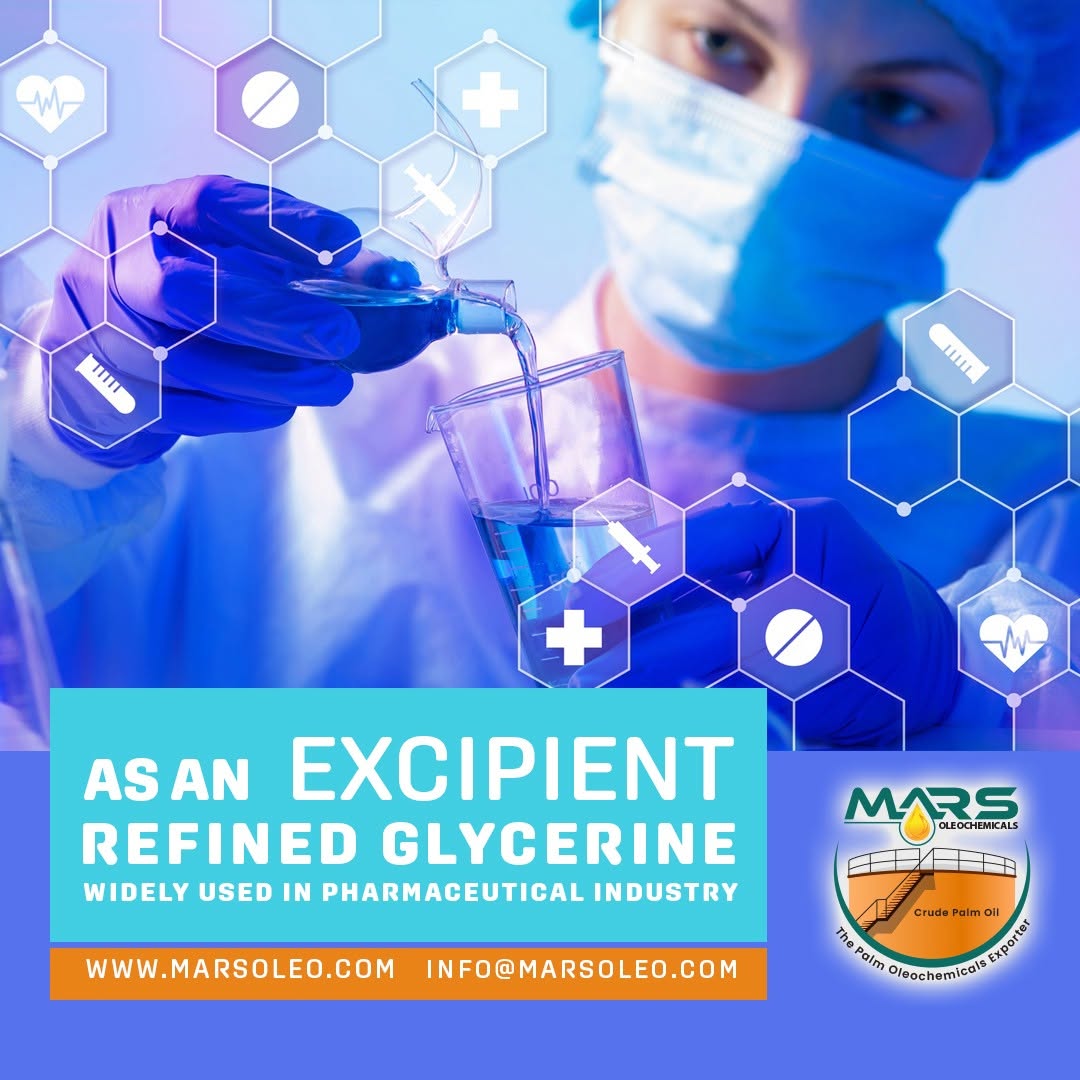
Refined glycerine is a clear, viscous and hygroscopic material widely used across many formulation industries. For pharmaceutical applications, glycerine can function as an inactive or excipient ingredient rather than as the active pharmaceutical ingredient, depending on the particular medicinal product. FDA documentation confirms glycerin is present as an inactive ingredient in approved pharmaceutical formulations.
Glycerine's hygroscopic character allows it to attract and retain moisture, supporting its use as a humectant in suitable formulations. It is also widely recognized as a solvent and formulation ingredient. These characteristics make glycerine relevant to products where moisture management, ingredient solubilization, viscosity and overall formulation consistency are important.

Refined glycerine serves as a pharmaceutical excipient, providing humectant, solvent and formulation-support functions effectively.
Refined glycerine as an excipient used in the pharmaceutical industry. For permanent website wording, pharmaceutical suitability should be linked to the specific grade and applicable pharmacopeial specification rather than purity percentage alone. EMA guidance specifically identifies glycerol among excipients for which DEG/EG contamination risks need appropriate controls and refers to European Pharmacopoeia glycerol monographs.
Mars Oleochemicals supplies high-purity refined glycerine for international commercial requirements. Buyers seeking material for pharmaceutical applications should specify the required grade, purity, applicable pharmacopeial standard, quantity, packaging and destination. This allows the required technical specification and documentation to be evaluated before supply.
What is refined glycerine? Refined glycerine is a high-purity form of glycerol used across pharmaceutical, personal care, food and industrial applications depending on the supplied grade and specification.
Is refined glycerine used as a pharmaceutical excipient? Yes. Suitable grades of glycerine are used as inactive or excipient ingredients in pharmaceutical formulations. FDA's Inactive Ingredient Database covers inactive ingredients used in approved drug products.
What is a pharmaceutical excipient? An inactive ingredient is a component of a drug product other than the active ingredient, according to FDA terminology.
Why is glycerine used as a humectant? Glycerine is hygroscopic and can retain moisture, making it useful in formulations requiring humectant functionality.
Can glycerine be used as a solvent? Yes. Glycerol is recognized for solvent functionality in addition to its humectant properties.
Is glycerine used in oral pharmaceutical products? Yes. FDA materials document glycerin use in approved oral drug formulations, among other dosage forms.
Is refined glycerine used in topical products? Suitable glycerine grades are widely associated with topical pharmaceutical and personal-care formulations.
Is 99.7% glycerine automatically pharmaceutical grade? No. A purity of 99.7% alone does not establish pharmaceutical-grade compliance. Required pharmacopeial specifications, impurity controls and other quality requirements must also be considered.
Why are DEG and EG controls important for pharmaceutical glycerine? EMA identifies glycerol among excipients where potential diethylene glycol and ethylene glycol contamination should be appropriately controlled.
What purity does Mars Oleochemicals supply? Mars Oleochemicals supplies refined glycerine grades including 99.7% and 99.5%, subject to agreed product specifications.
Does Mars Oleochemicals supply refined glycerine internationally? Mars Oleochemicals supplies refined glycerine for international commercial requirements.
How can buyers request a quotation? Buyers can provide the required purity, specification, applicable standard, quantity, packaging and destination to info@marsoleo.com.












Home :: Products :: Enquiry :: Contact Us :: Site Map
Copyright All Rights Reserved © 2025. Mars Oleochemicals :: Disclaimer :: Privacy Policy