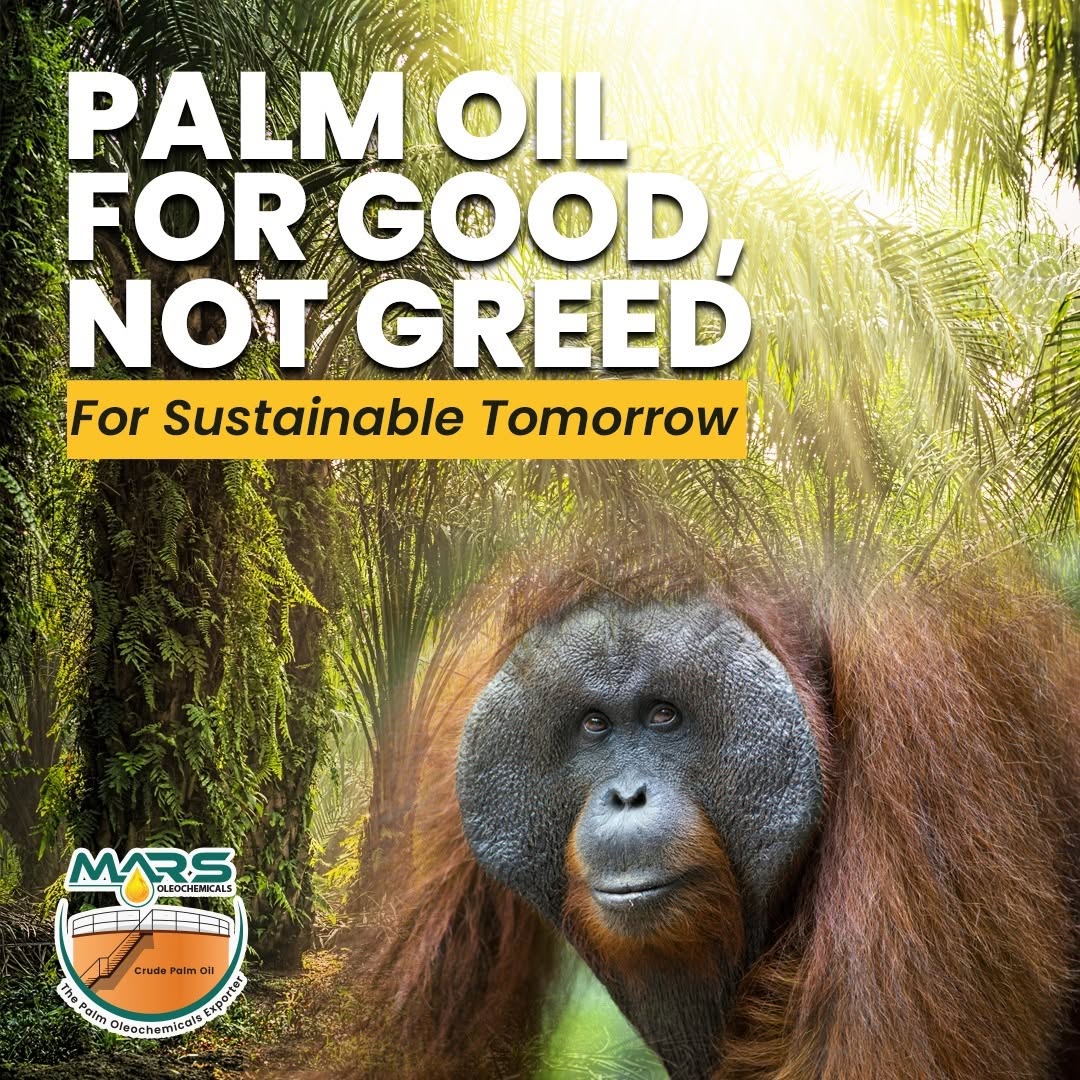
Oil palm is exceptionally productive in terms of vegetable oil produced per hectare. Global comparisons show substantially higher average oil yield than crops such as soybean, sunflower and rapeseed. This means that replacing the same quantity of palm oil with lower-yield alternatives could require significantly more agricultural land.
Palm-oil expansion has historically contributed to tropical deforestation and habitat loss in parts of Southeast Asia. Orangutans and other wildlife can be affected when natural forests are converted or fragmented.
Mars Oleochemicals particularly meaningful the strongest message is not that plantations replace natural habitat, but that responsible production must protect remaining forests and biodiversity.

Responsible palm oil production should combine efficient land use with protection of forests, biodiversity and communities.
Responsible sourcing frameworks can establish requirements around forest conversion, biodiversity, plantation management and supply-chain practices. RSPO's current Principles and Criteria address deforestation and HCV/HCS protection. Certification should only be claimed for a company, product or shipment when the relevant certification and chain-of-custody documentation actually support that statement.
Mars Oleochemicals, I recommend using wording such as “responsible palm oil,” “sustainability-focused sourcing,” or “certified sustainable options where documented and available” rather than making an unqualified claim that all supplied palm oil is sustainable.
The attached image carries the message “Palm Oil for Good, Not Greed - For Sustainable Tomorrow.” The underlying idea can be strengthened by focusing on measurable principles: producing more efficiently on existing agricultural land, avoiding conversion of important natural ecosystems, protecting biodiversity, respecting communities and improving supply-chain transparency.
Mars Oleochemicals supplies palm oil and palm-based products for international commercial requirements. Buyers with sustainability requirements should specify the relevant certification, traceability, origin or documentation requirement when requesting a quotation.
Is palm oil a high-yielding vegetable oil crop? Yes. Oil palm produces substantially more vegetable oil per hectare than several major alternative oil crops.
Does high yield make palm oil automatically sustainable? No. High yield improves land-use efficiency, but sustainability also depends on forest protection, biodiversity, land management, labor practices and supply-chain conditions.
Can palm oil production cause deforestation? Yes. Historical palm-oil expansion has contributed to tropical deforestation in parts of Southeast Asia, although impacts vary by place, period and production practice.
Why are orangutans associated with palm oil sustainability? Some orangutan habitats overlap regions where oil-palm expansion has occurred. Forest conversion and habitat fragmentation can negatively affect orangutan populations and other wildlife.
What is responsible palm oil? Responsible palm oil generally refers to production and sourcing practices designed to address issues such as deforestation, biodiversity, land management, communities and supply-chain transparency.
What is Roundtable on Sustainable Palm Oil? RSPO is the Roundtable on Sustainable Palm Oil, which operates a certification system and standards covering environmental and social requirements for participating palm-oil supply chains.
Does Roundtable on Sustainable Palm Oil address deforestation? Yes. Current Roundtable on Sustainable Palm Oil Principles and Criteria include provisions addressing deforestation and protection of High Conservation Value and High Carbon Stock areas.
Is replacing palm oil with another vegetable oil always better? Not necessarily. Because oil palm has a much higher average oil yield per hectare, replacing it with lower-yield oil crops could require more agricultural land for the same quantity of oil.
What should buyers request when sourcing sustainable palm oil? Buyers should specify their required certification, chain-of-custody model, traceability, origin, documentation and applicable sustainability standard.
Does Mars Oleochemicals supply palm oil products? Yes. Mars Oleochemicals supplies palm oil and palm-kernel products for international commercial requirements.
Can buyers request sustainability documentation? Buyers should include any required sustainability, traceability or certification documentation when submitting a commercial enquiry so availability can be confirmed for the specific product and shipment.
How can buyers contact Mars Oleochemicals? Commercial requirements can be sent to info@marsoleo.com.


Home :: Products :: Enquiry :: Contact Us :: Site Map
Copyright All Rights Reserved © 2025. Mars Oleochemicals :: Disclaimer :: Privacy Policy