


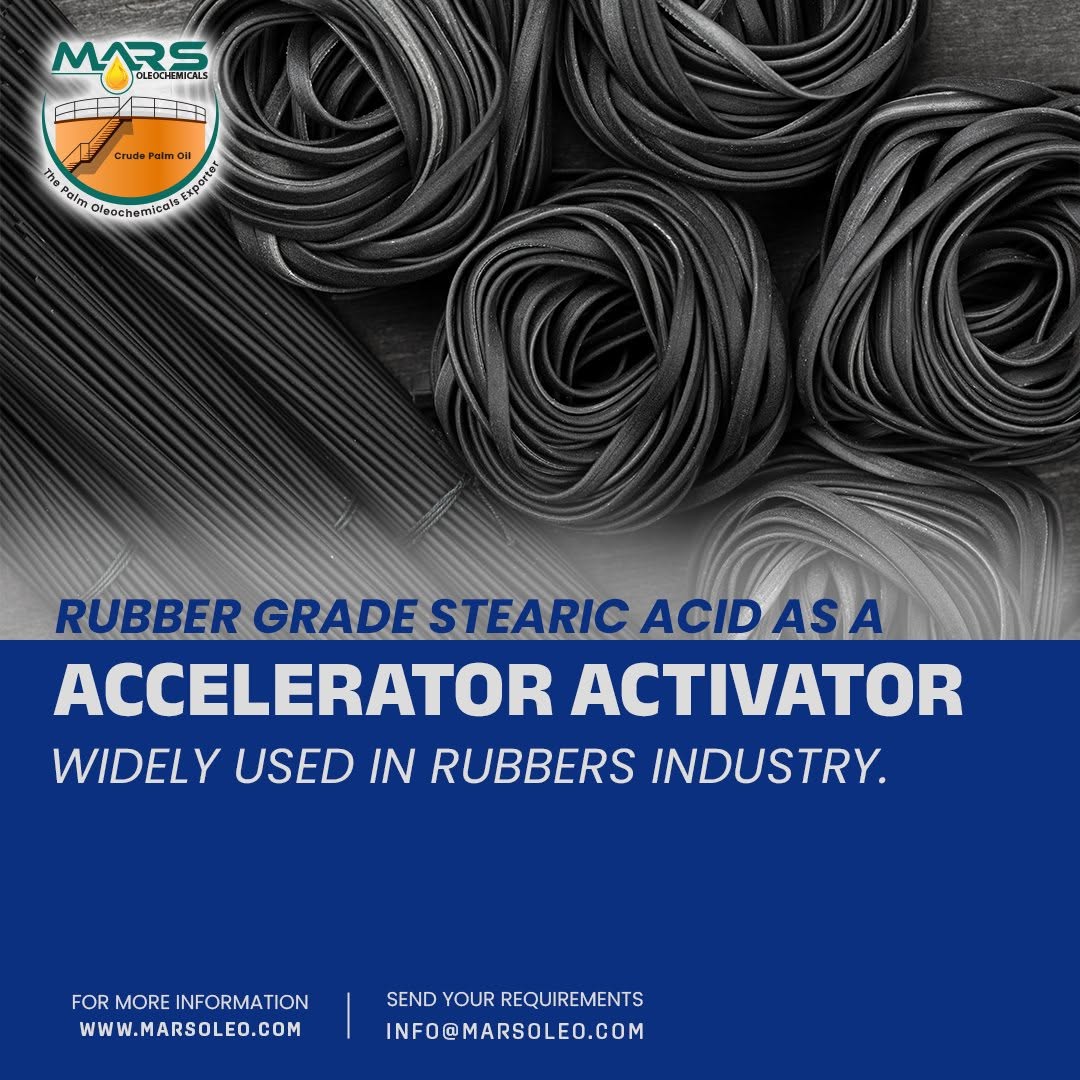
Rubber Grade Stearic Acid is an important industrial fatty acid widely used in rubber compounding, tyre manufacturing and the production of technical rubber components. It is valued for its role as a vulcanization activator in conventional sulfur-curing systems. Commercial rubber-grade stearic acid may be produced from palm-based vegetable fatty acids and is typically supplied in suitable solid forms, including flakes or beads. Its combination of functional properties makes it a useful ingredient in natural rubber and synthetic rubber manufacturing applications.
Stearic Acid as a Vulcanization Activator plays an important role in accelerated sulfur vulcanization. In many rubber curing systems, stearic acid works alongside zinc oxide to support the chemical activation of the vulcanization process. This interaction facilitates the formation of active zinc-containing species that participate in sulfur crosslinking reactions. Through its contribution to the overall curing system, rubber-grade stearic acid helps manufacturers develop the intended vulcanization characteristics and physical performance of finished rubber products.

Rubber Grade Stearic Acid vulcanization activation, rubber processing and consistent industrial product performance worldwide.
Rubber Grade Stearic Acid in Tyre Manufacturing is commonly incorporated into rubber compounding systems used for tyre components and other industrial rubber goods. Its additional functions can include supporting ingredient dispersion, processing characteristics and lubrication in suitable rubber formulations. The final effects depend on the rubber polymer, curing system, fillers, processing conditions and the specifications of the supplied fatty acid grade. Product performance must therefore be evaluated as part of the complete rubber formulation rather than attributed to stearic acid alone.
Palm-Based Rubber Grade Stearic Acid is commercially available in different fatty acid compositions, including blends containing stearic acid (C18:0) and palmitic acid (C16:0). Manufacturers assess relevant quality parameters such as acid value, iodine value, titre, moisture, colour and fatty acid composition. These specifications help determine whether a particular material is appropriate for its intended manufacturing requirements. International Standard ISO 8312 provides definitions and testing methods for stearic acid and stearic-palmitic acid blends used as rubber compounding ingredients.
Mars Oleochemicals Sdn. Bhd., Malaysia, supports international sourcing and export inquiries for Rubber Grade Stearic Acid, palm-based fatty acids and related industrial oleochemicals. Rubber manufacturers, tyre producers, distributors and international buyers can contact Mars Oleochemicals to discuss suitable product grades, specifications, available packaging and supporting technical documentation. Visit our website at www.marsoleo.com For product requirements, technical documentation, commercial information and international export inquiries, please email us at info@marsoleo.com.
What is Rubber Grade Stearic Acid? Rubber Grade Stearic Acid is an industrial fatty acid material used in rubber compounding. Commercial grades often contain blends of stearic and palmitic acids.
Why is Stearic Acid used as an accelerator activator in rubber manufacturing? Stearic acid works with zinc oxide in many accelerated sulfur vulcanization systems. Their interaction supports the formation of active zinc-containing species involved in rubber crosslinking.
What are the main applications of Rubber Grade Stearic Acid? Rubber Grade Stearic Acid is used in tyre manufacturing, natural and synthetic rubber compounding, hoses, belts, seals, gaskets and other industrial rubber products.
What is the difference between Rubber Grade and Cosmetic Grade Stearic Acid? Rubber-grade stearic acid is intended for industrial processing, while cosmetic-grade stearic acid must satisfy the applicable cosmetic quality and safety requirements. The grades are not automatically interchangeable.
Where can manufacturers source Rubber Grade Stearic Acid from Malaysia? Mars Oleochemicals Sdn. Bhd. supports international inquiries for palm-based stearic acid and related oleochemicals.








Home :: Products :: Enquiry :: Contact Us :: Site Map
Copyright All Rights Reserved © 2025. Mars Oleochemicals :: Disclaimer :: Privacy Policy


