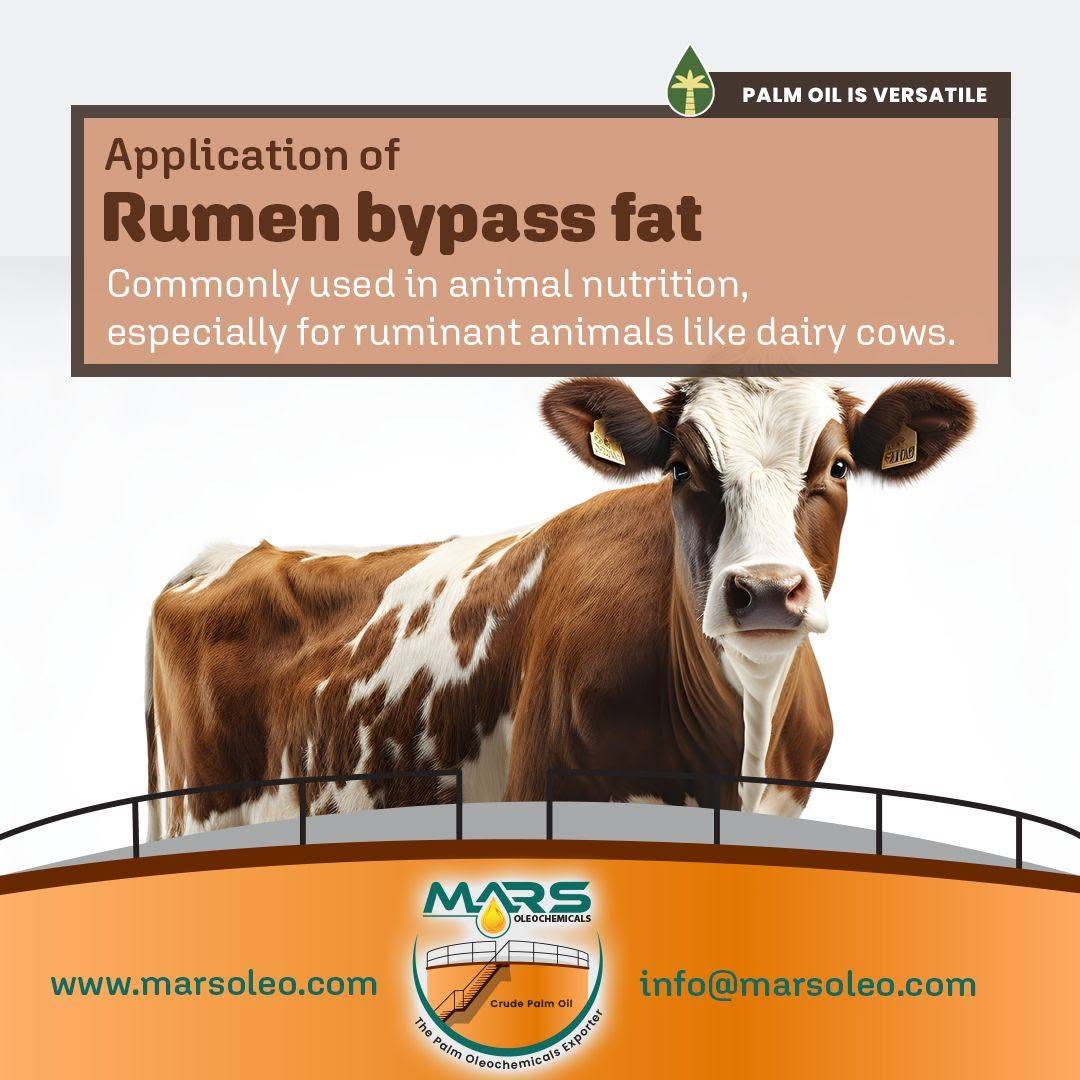
Rumen bypass fat is a concentrated fat supplement designed to remain relatively inert during microbial fermentation in the rumen. Common commercial forms include calcium salts of palm fatty acids and prilled saturated fatty acids. These products are intended to make a greater proportion of supplemental fatty acids available for digestion after leaving the rumen.
High-producing dairy cows often have substantial energy requirements, especially during early lactation when feed intake may not fully match milk-production demand. Rumen-protected fats increase ration energy density and may help reduce the energy deficit when incorporated into a properly balanced feeding programme.

dairy cow palm-based rumen bypass fat applications in ruminant nutrition and energy-dense feed.
Research indicates that supplemental protected fats can influence milk production, milk-fat yield, fatty-acid digestibility and energy use. Results vary according to the fat source, palmitic-acid concentration, feeding rate, lactation stage, forage quality and complete dietary formulation; therefore, performance claims should not be guaranteed for every herd.
Mars Oleochemicals supplies Palmitic Acid C16-80, C16-85, C16-98 and Calcium Salt of Palm Fatty Acids for dairy-cattle feed applications. Buyers can request current specifications, fatty-acid composition, packing options, certificates, availability and export quotations from Malaysia.
1. What is rumen bypass fat? Rumen bypass fat is a concentrated feed-fat supplement formulated to remain relatively inert during rumen fermentation, allowing more of its fatty acids to become available for digestion and absorption farther along the digestive tract.
2. Why is rumen bypass fat used for dairy cows? Rumen bypass fat is used to increase the energy density of dairy-cow diets without relying entirely on additional starch or unprotected oil. It is particularly relevant during early lactation and periods of high milk production.
3. What are the main types of rumen-protected fat? Common types include calcium salts of palm fatty acids and prilled saturated fatty-acid products containing palmitic acid, stearic acid or selected fatty-acid blends.
4. Can rumen bypass fat support milk production? Rumen bypass fat may support milk yield, milk-fat yield or energy-corrected milk in some dairy herds. The response depends on the product, fatty-acid profile, inclusion rate, lactation stage and complete ration.
5. What is calcium salt of palm fatty acids? Calcium salt of palm fatty acids is produced by reacting palm-derived long-chain fatty acids with calcium. The resulting calcium soap is designed to remain relatively inert under normal rumen conditions.
6. Is ordinary palm oil the same as rumen bypass fat? No. Ordinary palm oil should not automatically be described as rumen bypass fat. Protected-fat products require a suitable fatty-acid profile, physical form or manufacturing process that limits interaction with rumen microorganisms. This distinction follows from the recognised protected-fat forms used in dairy nutrition.
7. How should rumen bypass fat be included in dairy feed? The product and inclusion rate should be selected by a qualified animal nutritionist according to dry-matter intake, forage quality, existing dietary fat, milk-production level, body condition and farm objectives.
8. Where can buyers source palm-based rumen bypass fat? International buyers can contact Mars Oleochemicals Sdn. Bhd. for palmitic-acid feed grades, calcium salts of palm fatty acids, specifications, packing options, documentation, availability and export quotations from Malaysia.












Home :: Products :: Enquiry :: Contact Us :: Site Map
Copyright All Rights Reserved © 2025. Mars Oleochemicals :: Disclaimer :: Privacy Policy