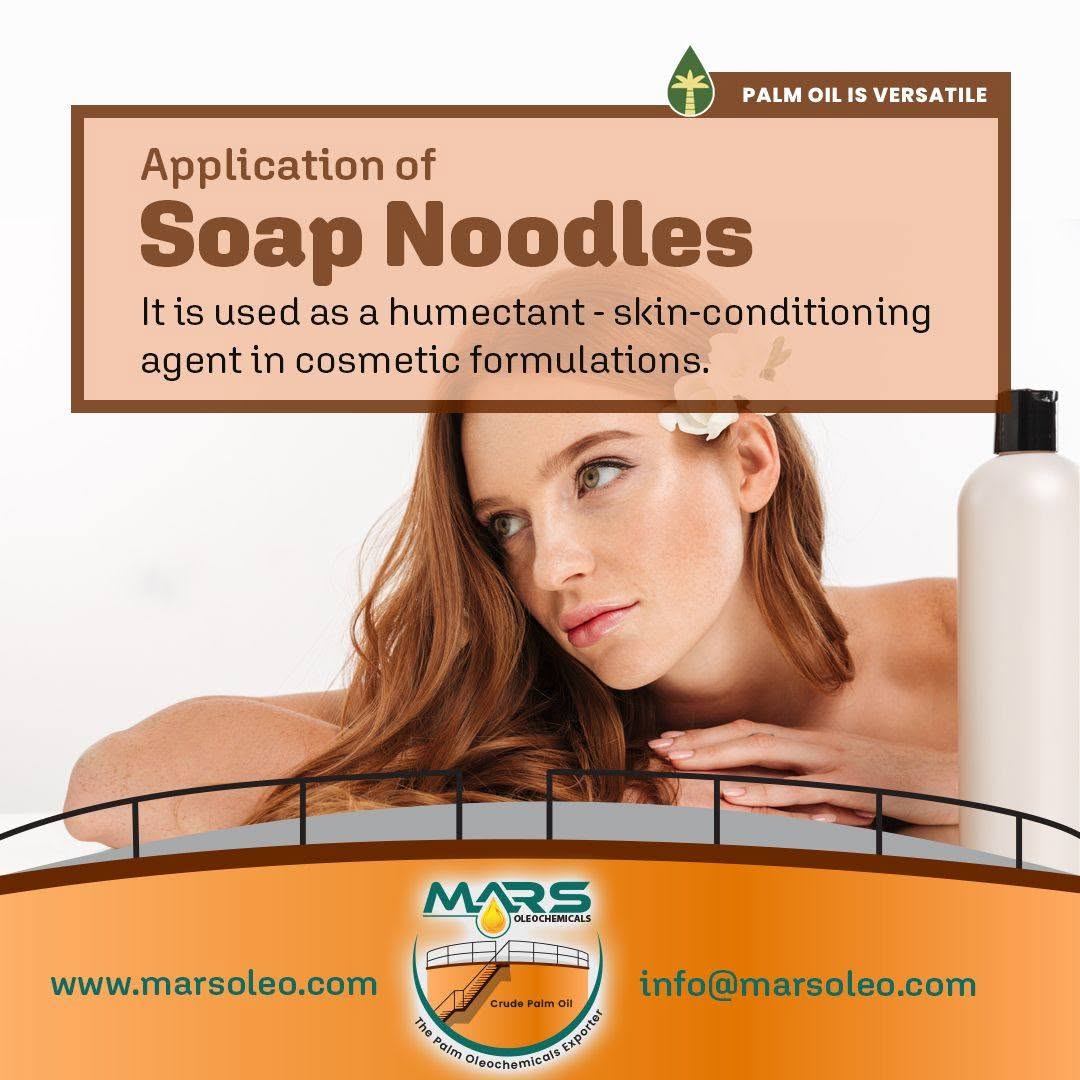
Soap noodles are semi-finished soap bases produced by saponifying oils, fats or fatty acids with an alkali. Palm-based grades commonly use palm oil, palm stearin and palm-kernel-derived materials. Their uniform noodle form helps soap manufacturers handle, transport and process the material efficiently when producing finished cleansing bars.
Manufacturers process soap noodles by mixing them with approved fragrances, colours and formulation additives. The blended soap is normally refined, milled, plodded, extruded, cut and stamped into finished bars. Because the basic saponification stage has already been completed, manufacturers can focus on the final product’s appearance, fragrance, performance and branding.

Soap noodles are standardized soap bases used to manufacture toilet, beauty, laundry and specialty bars.
Depending on their composition and quality grade, soap noodles can be used for standard toilet soap, premium beauty soap, baby soap, hotel soap, laundry bars, multipurpose soap and specialty cleansing bars. Wilmar describes different grades for standard toilet soap, high-foaming premium beauty soap and economical multipurpose bars.
Mars Oleochemicals Sdn. Bhd. supplies Malaysian palm-based soap noodles to soap manufacturers, importers, distributors and industrial buyers worldwide. Customers can request available compositions, TFM levels, packing options, documentation and export quotations for 80:20, 90:10, laundry and specialty soap-noodle grades.
1. What are soap noodles used for? Soap noodles are standardized soap bases primarly used to manufacture toilet soaps, bathing bars, beauty soaps, laundry soaps, hotel soaps and specialty cleansing bars.
2. Are soap noodles used as a humectant? Standard soap noodles are mainly base materials for soap-bar manufacturing rather than dedicated humectants. Humectant properties in a finished soap are generally provided by added glycerine or other moisture-retaining ingredients.
3. What are palm-based soap noodles made from? Palm-based soap noodles are commonly produced by saponifying palm oil, palm stearin, palm kernel oil or related fatty materials with an alkali.
4. What does 80:20 soap noodles mean? The 80:20 description generally refers to a soap base made from approximately 80% palm-oil or palm-stearin components and 20% palm-kernel or other lauric-oil components.
5. What products can be manufactured from soap noodles? Soap noodles can be processed into toilet soap bars, beauty soaps, bathing bars, laundry bars, hotel soaps, medicated soaps and other specialty cleansing bars.
6. Can colours, fragrances and additives be blended with soap noodles? Yes. Manufacturers commonly blend soap noodles with approved fragrances, colours, moisturising ingredients, fillers and functional additives before refining, plodding, cutting and stamping the finished soap bars.
7. How should buyers select a soap noodle grade? Buyers should evaluate total fatty matter, moisture, free alkali, colour, odour, fatty-acid composition, lather requirements, intended soap type and destination-market specifications.
8. Where can international buyers source Malaysian soap noodles? International buyers can contact Mars Oleochemicals Sdn. Bhd. for Malaysian soap-noodle specifications, grades, packing options, documentation, availability and export quotations.






Home :: Products :: Enquiry :: Contact Us :: Site Map
Copyright All Rights Reserved © 2025. Mars Oleochemicals :: Disclaimer :: Privacy Policy