


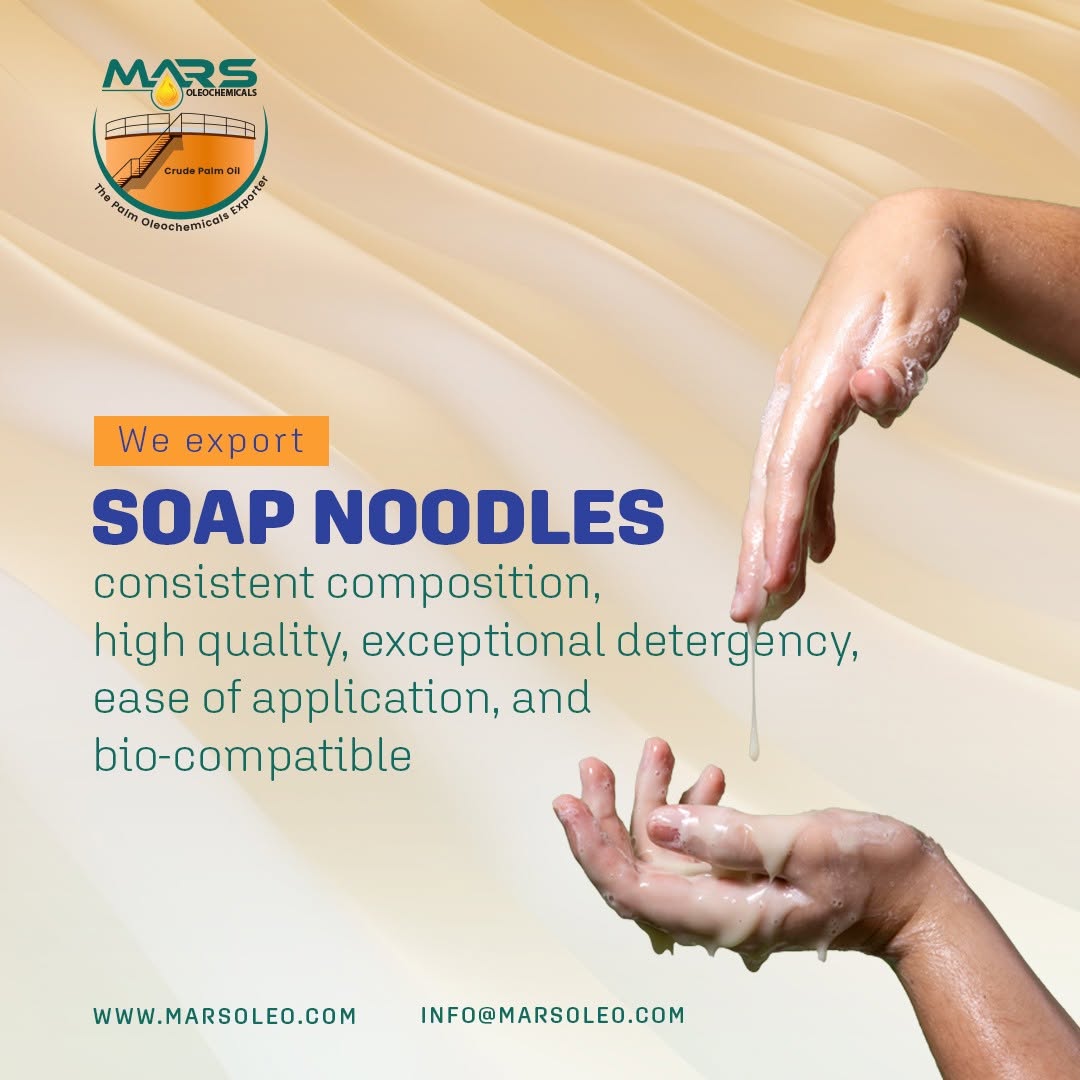
Soap noodles are semi-finished soap bases widely used in manufacturing toilet soaps, beauty bars, personal care soaps and laundry cleaning bars. Produced from vegetable oil derivatives, including palm oil, palm stearin and palm kernel oil, these materials primarily contain sodium salts of fatty acids. Palm-based soap noodles are valued for their cleansing properties, formulation flexibility and convenient processing characteristics. They are generally supplied as solid noodles or pellets that manufacturers can incorporate into finished soap products. Mars Oleochemicals Sdn. Bhd., a Malaysian exporter of palm-based oleochemicals, offers various soap noodle grades for international buyers seeking suitable raw materials for commercial soap manufacturing.
The performance of palm-based soap noodles depends on their fatty acid composition, Total Fatty Matter (TFM), moisture content and other quality parameters. Commercial formulations commonly include 80:20 and 90:10 blends, representing different proportions of palm-derived and palm-kernel-derived fatty materials. Mars Oleochemicals lists soap noodle grades with minimum TFM specifications of 65%, 68%, 72% and 78%, allowing manufacturers to evaluate different options for their finished products. Higher-TFM grades are commonly associated with toilet and personal care soap manufacturing, while other formulations may be selected for laundry and household cleaning applications. Additional quality considerations include free alkali, free fatty acids, sodium chloride content, appearance and batch-to-batch consistency.

Palm-based soap noodles are versatile soap bases used to manufacture toilet, beauty, and laundry bars.
High-quality soap noodles provide manufacturers with a practical foundation for developing finished soap bars with targeted cleansing, lathering, hardness and processing characteristics. Their formulation can influence the performance of finished soap products, including foam generation, bar firmness, rate of wear and washing properties. Palm-derived fatty acids contribute useful structural characteristics, while palm kernel-derived fatty acids can support lather development and cleansing functionality. During commercial soap manufacturing, soap noodles can be blended with permitted fragrances, colors and other ingredients before being processed into finished bars. Selecting the correct TFM grade and fatty acid composition helps manufacturers achieve their intended performance, appearance and production requirements.
Mars Oleochemicals Sdn. Bhd. supports international sourcing of palm-based soap noodles for toilet soap, beauty bar, laundry soap and household cleaning product manufacturers. Its product portfolio includes different soap noodle compositions and TFM grades to accommodate varying manufacturing requirements. International importers and distributors should consider product specifications, batch quality documentation, packaging preferences, required quantities and destination-market regulations before procurement. Choosing an appropriate soap base is essential for maintaining finished-product consistency and production efficiency. Businesses seeking soap noodles from Malaysia can explore the product range at www.marsoleo.com or info@marsoleo.com. to discuss grades, specifications and international export requirements.
What are palm-based soap noodles, and how are they used? Palm-based soap noodles are semi-finished soap materials made primarily from sodium salts of fatty acids derived from palm oil, palm stearin and palm kernel oil. They are used as base materials for manufacturing toilet soap, beauty bars, personal care soap and laundry cleaning bars.
What is the difference between 80:20 and 90:10 soap noodles? The terms 80:20 and 90:10 generally describe the relative proportions of palm-derived and palm-kernel-derived fatty materials used in soap noodle formulations. Different blends influence properties such as lather, hardness, cleansing performance and soap bar characteristics. The exact composition should be confirmed using the supplier's technical specifications.
What does TFM mean in soap noodles? TFM stands for Total Fatty Matter. It measures the fatty matter present in soap and is an important commercial quality parameter. Soap noodles are available in different TFM grades, including 65%, 68%, 72% and 78%, depending on their intended manufacturing applications.
What are the main applications of soap noodles? Soap noodles are primarily used in toilet soap, beauty bar, personal care soap, laundry soap and household cleaning bar manufacturing. Manufacturers select different grades based on required cleansing properties, lather performance, hardness, formulation requirements and production conditions.
How can international buyers purchase soap noodles from Mars Oleochemicals? International buyers can contact Mars Oleochemicals through www.marsoleo.com or info@marsoleo.com. Buyers should provide the required soap noodle grade, TFM specification, preferred composition, quantity, packaging requirements and destination port when requesting product information or export quotations.











Home :: Products :: Enquiry :: Contact Us :: Site Map
Copyright All Rights Reserved © 2025. Mars Oleochemicals :: Disclaimer :: Privacy Policy


