


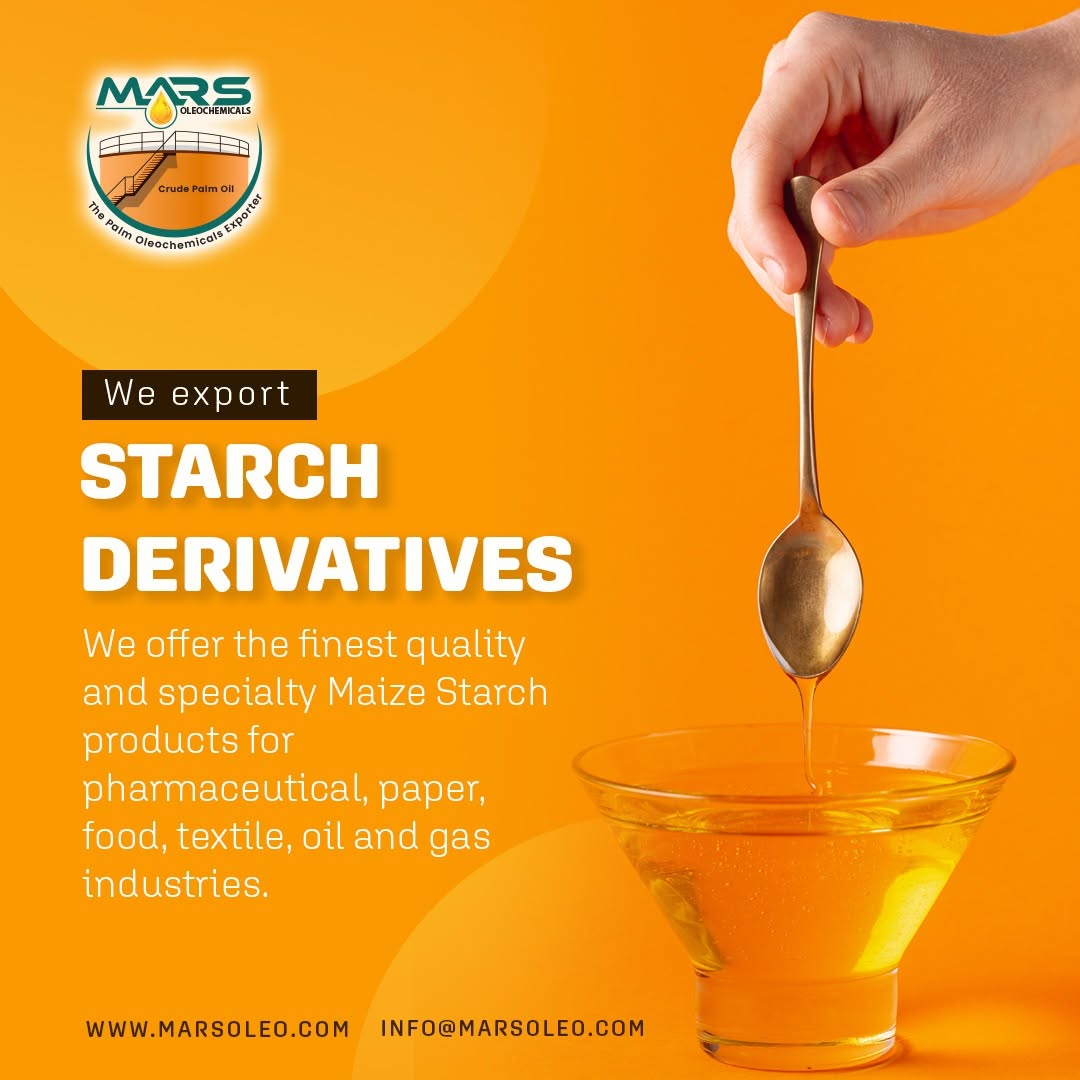
Starch derivatives are an important group of carbohydrate-based ingredients produced from natural starch sources, including maize (corn). These materials are widely used in food manufacturing, pharmaceuticals, paper production, textile processing and selected industrial applications. Native maize starch consists primarily of amylose and amylopectin, two polysaccharides that contribute to its thickening, binding and gelatinization properties. Through hydrolysis, modification and further chemical or enzymatic conversion, starch can be transformed into products with different functional characteristics. Commercial maize-derived ingredients include glucose syrup, maltodextrin, dextrose monohydrate, sorbitol and high maltose corn syrup. Each material offers distinct physical and processing properties depending on its composition and manufacturing method. Mars Oleochemicals Sdn. Bhd., a Malaysian exporter of specialty chemical and industrial ingredients, offers maize starch and starch-derived products for international manufacturers seeking commercially specified raw materials.
Selecting the correct starch-derived ingredient requires understanding the differences between native starch, modified starch, starch hydrolysates and carbohydrate derivatives. Native maize starch is commonly supplied as a powder and is used for thickening, binding and other processing functions. Glucose syrup is a concentrated liquid carbohydrate mixture obtained through the hydrolysis of starch, while maltodextrin is generally supplied as a powder and used as a bulking agent or ingredient carrier. Dextrose monohydrate is crystalline glucose containing water of crystallization, and sorbitol 70% is a liquid polyol formulation produced through the further processing of suitable carbohydrate feedstocks. Important commercial quality parameters vary by ingredient and may include moisture content, dextrose equivalent (DE), viscosity, solids concentration, pH, color, purity and microbiological limits. Manufacturers should compare these specifications carefully to ensure that the selected product is appropriate for their intended processing conditions.

Maize starch derivatives provide thickening, binding, sweetening and processing functionality across food and industrial sectors.
Maize starch and its derivatives offer different functional properties that make them valuable across multiple industries. In food and beverage manufacturing, suitable starch products are used for thickening, texture modification, bulking, sweetening, moisture management and ingredient stabilization. Glucose syrups are commonly used in confectionery and bakery manufacturing, while maltodextrin serves as a carrier or bulking ingredient in various food formulations. In pharmaceutical manufacturing, appropriately qualified native and modified starch grades may serve as tablet binders, fillers or disintegrants, while certain starch-derived carbohydrates have other specialized formulation uses. The paper and textile industries use suitable starch products for surface sizing, coating, binding, film formation and processing support. In the oil and gas industry, specific modified starch grades are used in certain water-based drilling fluids for viscosity and fluid-loss control. These industrial functions depend on the individual starch derivative and cannot be attributed to every maize-based product.
Mars Oleochemicals Sdn. Bhd. supports international sourcing of maize starch and starch-derived ingredients for manufacturers, importers and industrial distributors. The company's published product portfolio includes Corn Starch, Sorbitol 70%, Glucose Syrup, Dextrose Monohydrate, Maltodextrin and High Maltose Corn Syrup, among other listed starch-based products. These materials support different commercial requirements in food processing, specialty ingredient manufacturing and selected pharmaceutical and industrial applications. International buyers should evaluate the required product type, concentration, physical form, quality specifications, packaging and destination-market regulations before procurement. Technical Data Sheets (TDS), Certificates of Analysis (COA) and relevant certification documentation help manufacturers assess product suitability. Businesses seeking information about starch derivatives from Malaysia can visiting our website at www.marsoleo.com. For product requirements, technical documentation, commercial information and international export inquiries, please email us at info@marsoleo.com.with their required product grade, quantity, packaging preference, intended application and destination port.
What are starch derivatives, and how are they produced from maize starch? Starch derivatives are products manufactured by processing native starch to obtain specific functional or chemical properties. Maize starch can undergo hydrolysis, physical modification, chemical modification or further conversion to produce ingredients such as glucose syrup, maltodextrin, dextrose and sorbitol. Each product has different properties and applications.
What starch-derived products does Mars Oleochemicals supply? Mars Oleochemicals lists Corn Starch, Sorbitol 70%, Glucose Syrup, Dextrose Monohydrate, Maltodextrin and High Maltose Corn Syrup among its starch derivative products. These ingredients are used in various food and industrial applications. Buyers should confirm the latest specifications, available grades and applicable certifications.
What is the difference between maize starch, glucose syrup and maltodextrin? Maize starch is a polysaccharide ingredient commonly supplied as a powder. Glucose syrup is a concentrated liquid mixture of carbohydrates produced through starch hydrolysis. Maltodextrin is a partially hydrolyzed starch product generally available as a powder, commonly used for bulking and carrying other ingredients. Their functional properties and applications differ.
Are starch derivatives suitable for pharmaceutical, paper, textile and oilfield applications? Yes, but suitability depends on the specific product. Appropriately qualified pharmaceutical starch grades may function as binders, fillers or disintegrants. Paper and textile starches can provide sizing and binding properties. Selected modified starches are used in water-based drilling fluids for viscosity and filtration-loss control. Not every starch derivative is suitable for every industry.
How can international buyers purchase starch derivatives from Mars Oleochemicals? International buyers can contact Mars Oleochemicals through www.marsoleo.com or info@marsoleo.com. Buyers should specify the required product, grade, concentration or dextrose equivalent where relevant, quantity, packaging preference, intended application, destination port and applicable quality documentation.











Home :: Products :: Enquiry :: Contact Us :: Site Map
Copyright All Rights Reserved © 2025. Mars Oleochemicals :: Disclaimer :: Privacy Policy


