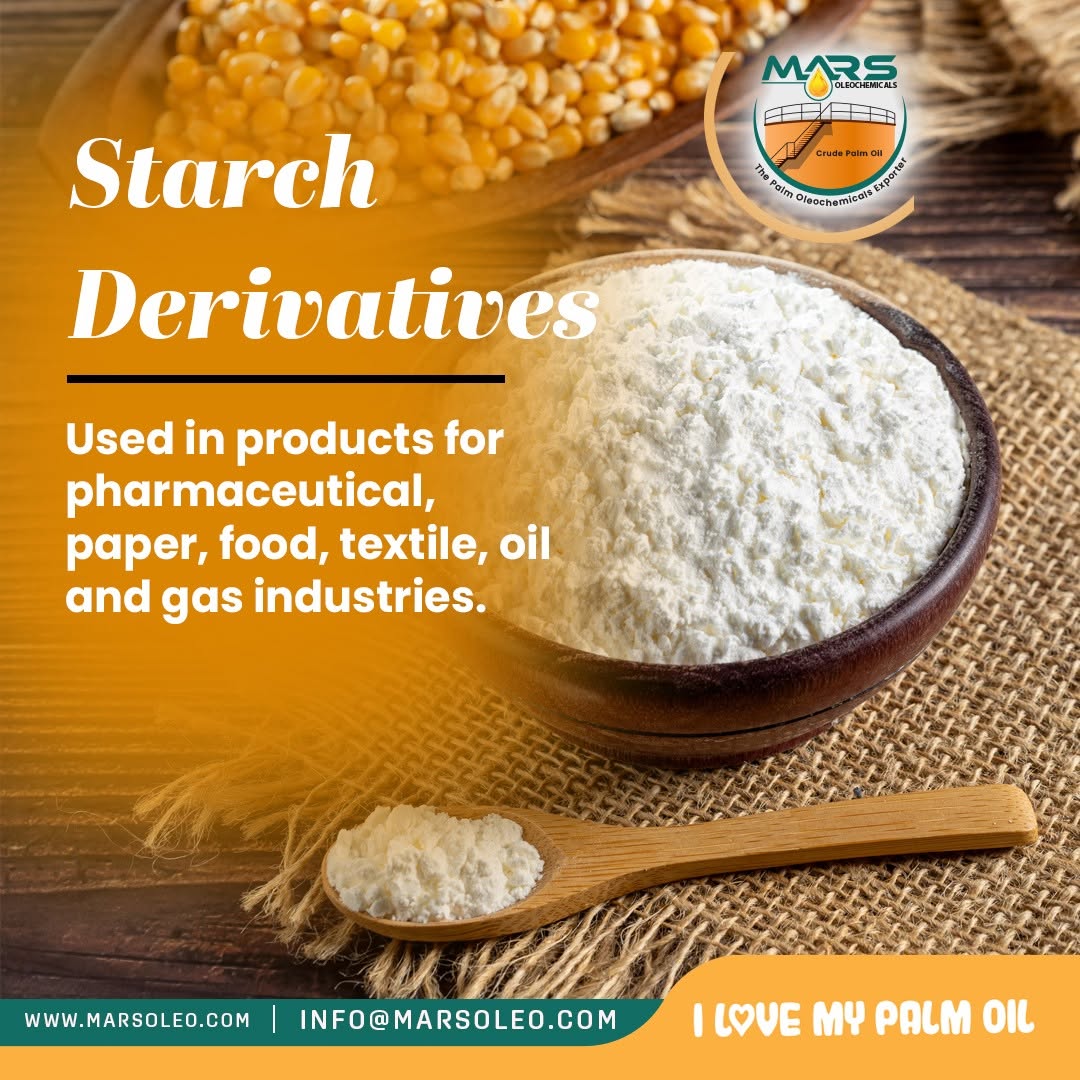
Starch is a naturally occurring carbohydrate commonly obtained from crops such as corn, wheat, potato, tapioca, and other starch-rich agricultural sources. Through physical, enzymatic, or chemical processing, starch can be converted into derivatives with functional characteristics tailored to specific manufacturing requirements.
starch derivatives may serve as thickeners, stabilizers, bulking agents, carriers, binders, or carbohydrate ingredients. Products such as maltodextrin, glucose syrup, dextrose, and selected modified starches are used across various food and beverage formulations depending on technical and regulatory requirements.
Pharmaceutical applications may also use suitable starch-derived materials as excipients, binders, fillers, disintegrants, or processing aids. Pharmaceutical use requires the appropriate grade, purity, documentation, and compliance with relevant regulatory standards.

Starch derivatives provide functional ingredients for food, pharmaceutical, paper and industrial manufacturing applications worldwide.
The paper industry uses starch and modified starch products for applications such as surface sizing, coating, strengthening, adhesion, and improving paper-processing characteristics. The required starch properties depend on the paper grade and production process.
In textile manufacturing, suitable starch products can be used in yarn sizing and fabric-processing operations. Sizing helps protect yarn during weaving by improving strength, reducing friction, and supporting more efficient textile processing.
Starch derivatives are also used in industrial applications where viscosity modification, fluid-loss control, binding, film formation, or rheology management is required. Certain modified starch products are used in drilling-fluid and oilfield formulations depending on technical specifications.
Mars Oleochemicals supplies starch-derived products for international commercial requirements. Buyers can provide the required product, specification, quantity, packaging, application, and destination so the appropriate grade can be considered.
What are starch derivatives? Starch derivatives are products obtained by processing or modifying native starch to provide specific functional properties for food, pharmaceutical, paper, textile, and industrial applications.
What are starch derivatives used for? Depending on the product, starch derivatives can be used for thickening, stabilizing, binding, bulking, viscosity control, film formation, sizing, coating, and other manufacturing functions.
Are starch derivatives used in food products? Yes. Suitable starch derivatives are widely used in foods and beverages for texture, stabilization, bulking, sweetness, binding, and processing functionality.
Are starch derivatives used in pharmaceuticals? Yes. Appropriate pharmaceutical-grade starch derivatives can be used as excipients, binders, fillers, disintegrants, or other formulation ingredients.
Why is starch used in paper manufacturing? Starch and modified starches can help improve paper strength, surface characteristics, sizing, coating, adhesion, and processing performance.
How are starch derivatives used in textiles? Starch-based products are commonly used in textile sizing to protect yarn, increase strength, reduce friction, and support weaving efficiency.
Are starch derivatives used in oil and gas applications? Certain specialized modified starches are used in drilling-fluid and oilfield applications for functions such as viscosity modification and fluid-loss control.
What is maltodextrin? Maltodextrin is a carbohydrate produced through partial hydrolysis of starch and is used in food and industrial formulations for various functional purposes.
Is glucose syrup made from starch? Yes. Glucose syrup is commonly manufactured through hydrolysis of starch into smaller carbohydrate molecules.
Does Mars Oleochemicals supply starch derivatives? Mars Oleochemicals supplies starch-derived products for international food, industrial, and manufacturing requirements.
How can buyers request a quotation? Buyers can provide their required product, specification, application, quantity, packaging, and destination to info@marsoleo.com.









Home :: Products :: Enquiry :: Contact Us :: Site Map
Copyright All Rights Reserved © 2025. Mars Oleochemicals :: Disclaimer :: Privacy Policy