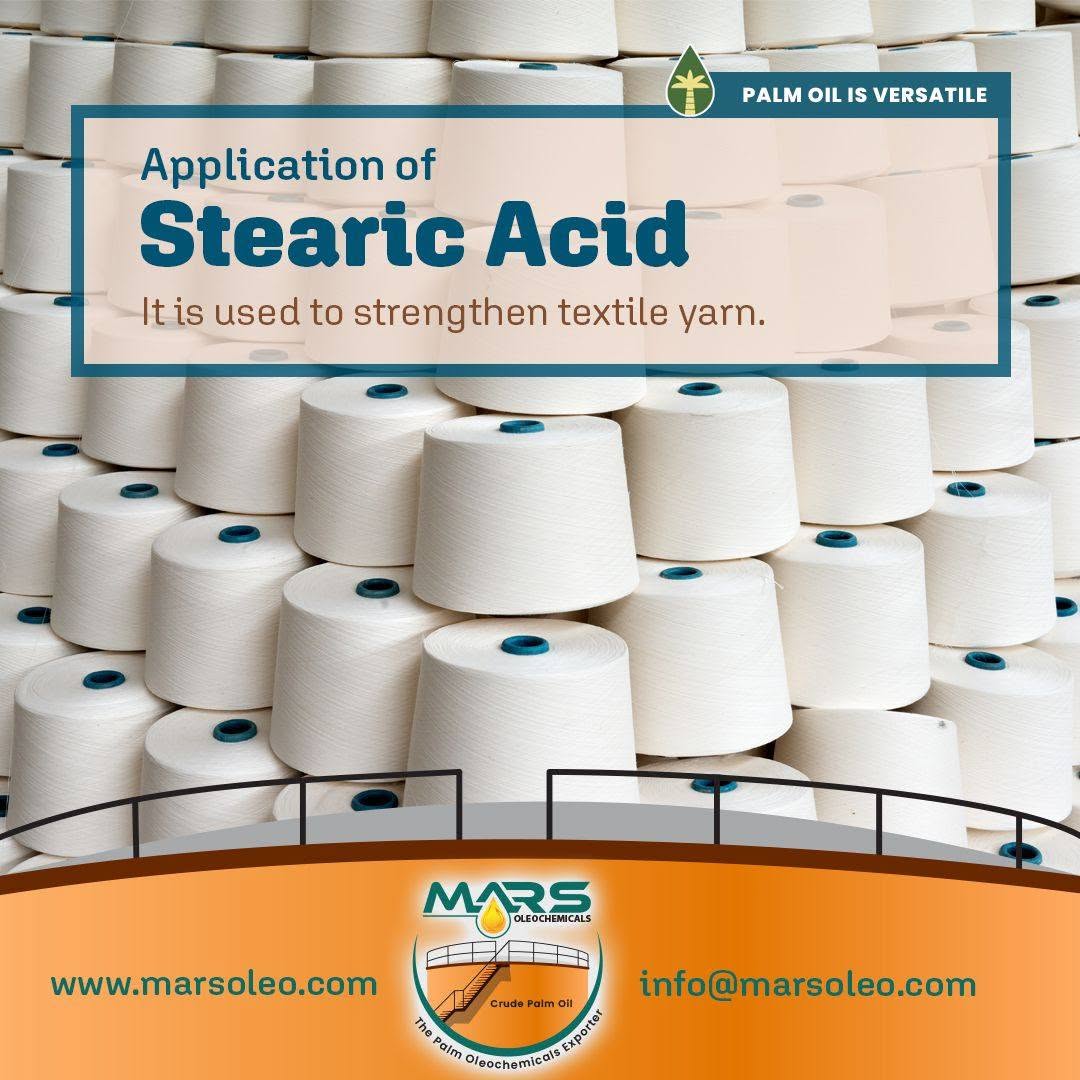
Stearic acid is a long-chain saturated fatty acid used as a raw material and functional auxiliary in numerous industrial formulations. Within textiles, stearic acid and its derivatives may be used in sizing, lubrication, softening and finishing systems. PubChem identifies stearic acid as a textile auxiliary, while commercial oleochemical suppliers list textile and leather auxiliaries among its applications.
Stearic acid can contribute lubricity and surface conditioning when incorporated into a properly designed textile formulation. By helping reduce friction between fibres, guides and processing equipment, it may support smoother yarn movement, improve flexibility and reduce friction-related damage. The result depends on dosage, emulsification, fibre type and the complete sizing or finishing formulation.

Mars Oleochemicals notes the use of stearic acid with castor oil in textile-sizing softeners.
Textile sizing applies a protective formulation to yarn before weaving to improve processability. Stearic acid may be used in softening or lubricating components of sizing systems, including formulations associated with castor-oil-derived materials. It can help the sized yarn remain flexible and pass more smoothly through production equipment.
Mars Oleochemicals Sdn. Bhd. supplies palm-based stearic acid to textile manufacturers, chemical formulators, importers and distributors worldwide. Buyers can request specifications, packing information, documentation and export quotations for multiple Triple Pressed Stearic Acid grades, including C18-40 through C18-92, according to their formulation requirements.
1. What is stearic acid used for in textile processing? Stearic acid is used as a textile auxiliary and as a raw material in selected sizing, lubricating, softening, finishing and fibre-processing formulations.
2. Does stearic acid strengthen textile yarn? Stearic acid does not automatically increase the intrinsic strength of every yarn. In suitable sizing and lubricating formulations, it may improve yarn handling, reduce friction and help limit processing-related fibre damage or breakage.
3. How is stearic acid used in textile sizing? Stearic acid may be incorporated into textile sizing and softening systems, including formulations prepared with castor-oil-derived materials, to support yarn flexibility, lubrication and processing performance.
4. Can stearic acid help lubricate textile yarn? Yes. Stearic acid, its esters and related stearate compounds may contribute lubricating and friction-reducing properties in suitable textile-processing formulations.
5. What benefits can stearic acid provide during yarn processing? Properly formulated stearic acid systems may support smoother yarn movement, reduced fibre-to-metal friction, improved flexibility, more consistent handling and fewer friction-related processing interruptions.
6. Which textile processes may use stearic acid? Potential applications include yarn sizing, fibre lubrication, spinning preparations, textile softening, fabric finishing, water-repellent treatments and the production of textile auxiliaries.
7. Which stearic acid grade is suitable for textile manufacturing? The suitable grade depends on the formulation and process. Buyers should evaluate stearic acid content, iodine value, acid value, colour, titre, moisture, physical form and compatibility with other textile ingredients.
8. Where can buyers source Malaysian stearic acid? International buyers can contact Mars Oleochemicals Sdn. Bhd. for palm-based stearic acid grades, specifications, packing options, documentation, availability and export quotations from Malaysia.








Home :: Products :: Enquiry :: Contact Us :: Site Map
Copyright All Rights Reserved © 2025. Mars Oleochemicals :: Disclaimer :: Privacy Policy