


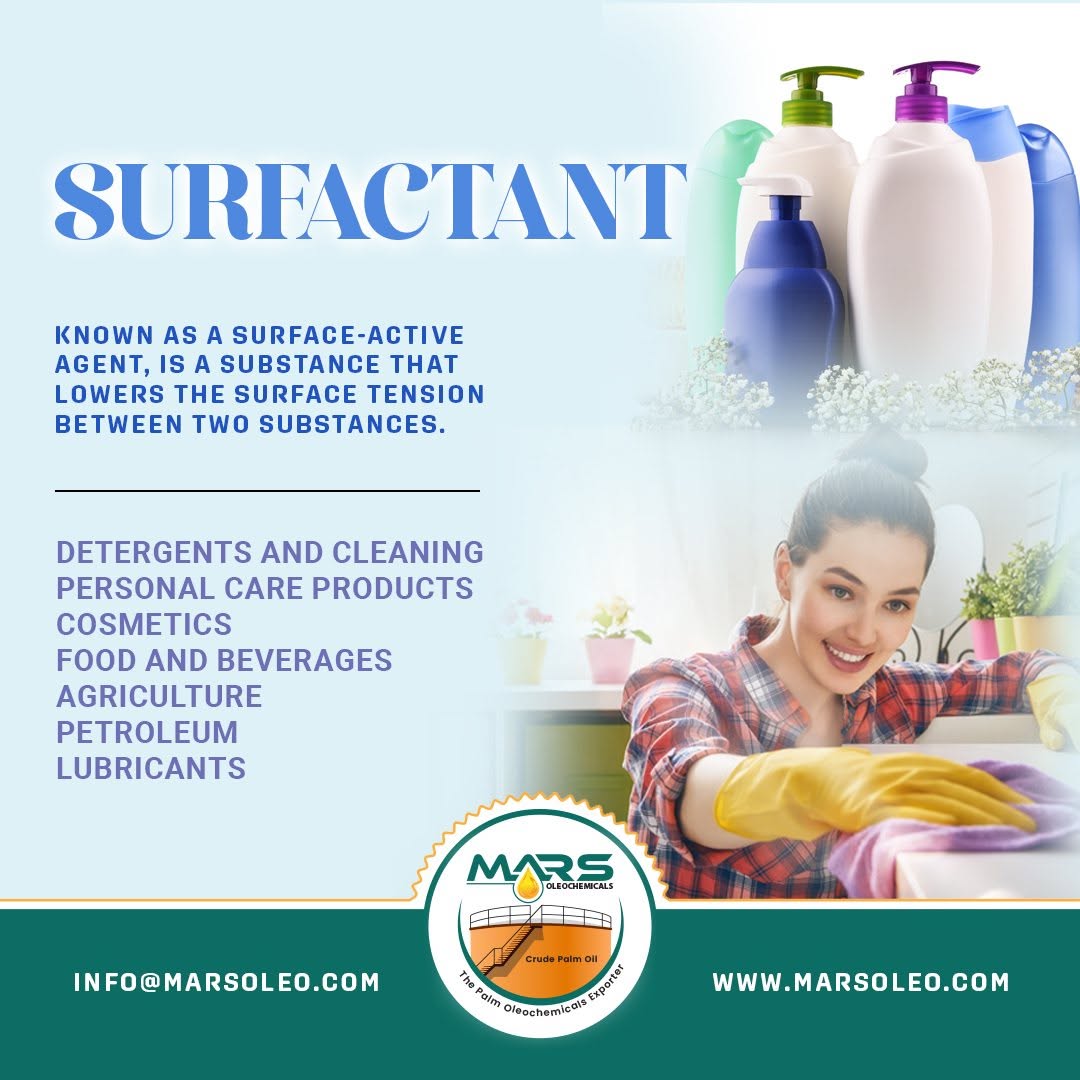
Surfactants are surface-active agents designed to reduce surface or interfacial tension between different substances. Their unique molecular structure allows interaction with both water and oil-like materials, making surfactants essential ingredients in detergents, personal care, cosmetics and many industrial formulations.
There is no single universal surfactant. Anionic, amphoteric, nonionic and cationic surfactants provide different characteristics. Products such as SLES, SLS, MES and CAPB can therefore be selected according to the required cleaning, foaming, wetting, emulsifying or formulation properties.

Surfactants reduce surface tension cleaning, wetting, foaming, emulsification, dispersion and industrial formulation performance.
Surfactants are widely used in laundry detergents, dishwashing liquids, household cleaners, shampoo, body wash and other cleansing formulations. Specialized surfactants can also support agriculture, petroleum, lubricants, textile processing and industrial cleaning applications.
Mars Oleochemicals supports international manufacturers and distributors requiring surfactants for home care, personal care and industrial applications. Buyers can provide the required surfactant type, active matter, specification, quantity, packaging, application and destination for suitable commercial product matching.
What is a Surfactant? A surfactant is a surface-active agent that reduces surface or interfacial tension and can provide cleaning, wetting, foaming, emulsifying or dispersing functions.
What are the main types of Surfactants? The main categories are anionic, nonionic, amphoteric and cationic surfactants.
What are Surfactants used for? Surfactants are widely used in detergents, household cleaners, personal care, cosmetics and numerous industrial applications.
What is SLES? SLES, or Sodium Laureth Sulfate, is an anionic surfactant widely used for cleansing and foaming in personal-care and cleaning formulations.
What is CAPB? Cocamidopropyl Betaine is an amphoteric surfactant commonly used in shampoo, body wash and other personal-care cleansing formulations.
What is MES? Methyl Ester Sulfonate is an anionic surfactant commonly used in laundry and cleaning formulations.
Are Surfactants used in detergents? Yes. Surfactants provide important cleaning, wetting, emulsifying and soil-removal functions in detergent formulations.
Can Surfactants be used in food? Only ingredients specifically approved and suitable for food applications should be used. General detergent surfactants are not automatically suitable for food.
What Surfactants does Mars Oleochemicals supply? Commercial requirements may include SLES N70, SLS 95, CAPB 30/45, CDEA 85, MES and other relevant grades subject to specification and availability.
How can buyers contact Mars Oleochemicals? Commercial enquiries can be sent to info@marsoleo.com.





Home :: Products :: Enquiry :: Contact Us :: Site Map
Copyright All Rights Reserved © 2025. Mars Oleochemicals :: Disclaimer :: Privacy Policy


