The word surfactant comes from “surface-active agent.” Surfactants contain molecular structures that allow them to interact with both water and oily materials, helping reduce surface and interfacial tension.
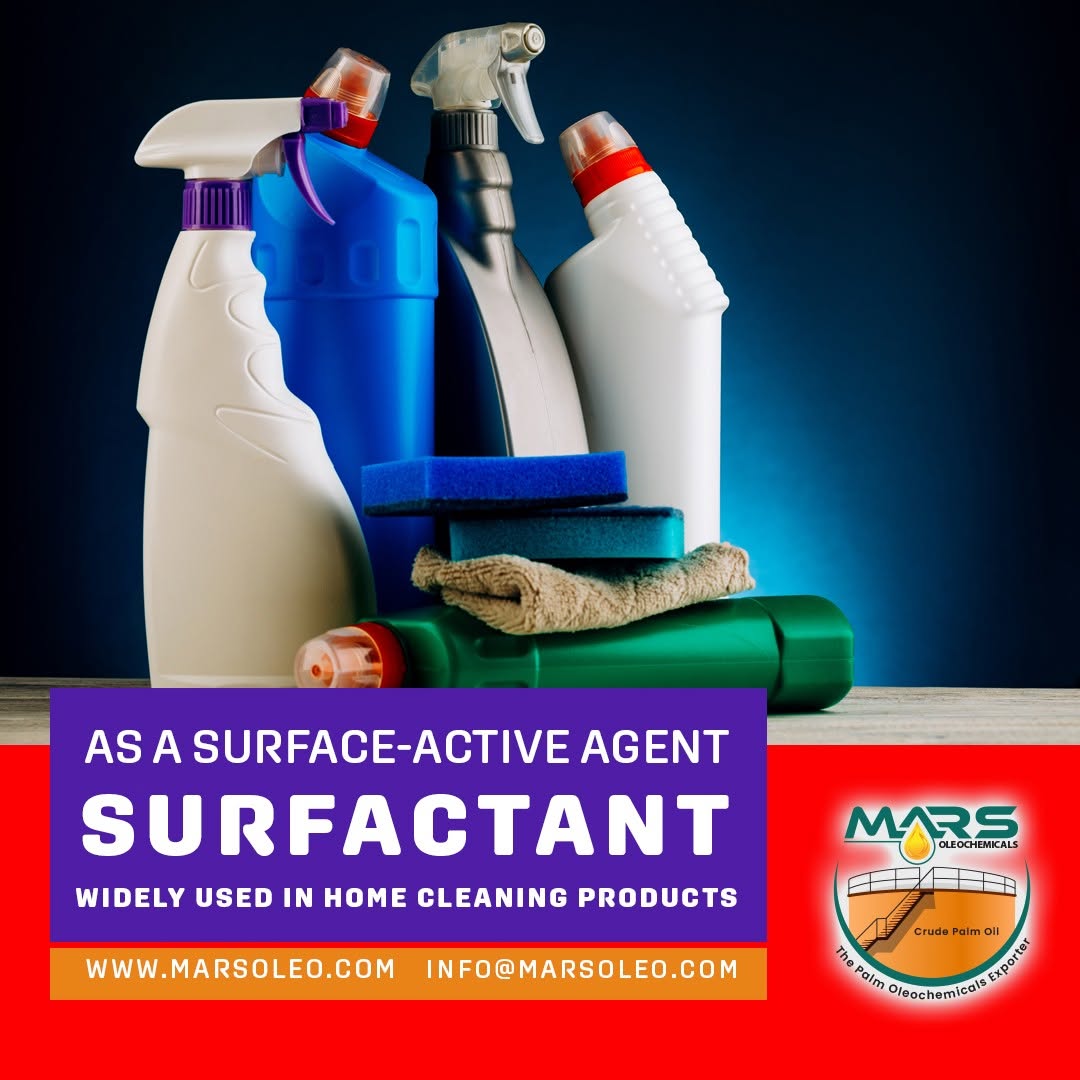
surfactants as surface-active agents widely used in home-cleaning products. The image features household spray bottles, detergent containers, sponges and cleaning cloths, directly reinforcing their role in cleaning formulations.
Water alone may have difficulty removing oily or greasy soils from many surfaces. Surfactants help overcome this by improving wetting and allowing oily material to become dispersed or emulsified into the cleaning solution.
Depending on surfactant chemistry and formulation design, they may help: Wet dirty surfaces, Loosen soils, Lift grease, Disperse particulate matter, Emulsify oily residues, Produce or control foam, Keep removed soil suspended and Improve rinsing performance

Surfactants reduce surface tension, helping home-cleaning formulations wet, loosen, emulsify, disperse and remove soils effectively.
Laundry formulations rely on surfactants to help water penetrate fabrics and remove a combination of oily, particulate and water-soluble soils.
Anionic surfactants are commonly associated with strong detergency and foaming, while other surfactant types may be added to modify foam, mildness, wetting or formulation stability.
Commercial laundry detergents normally contain a complete formulation rather than a single surfactant ingredient.
Mars Oleochemicals supplies surfactants and related palm-based oleochemical ingredients for international household-cleaning, detergent, personal-care and industrial requirements.
Commercial buyers can provide the required product, concentration, specification, quantity, packaging and destination when requesting supply information.
What is a surfactant? A surfactant is a surface-active substance that reduces surface or interfacial tension and helps liquids interact with oils, soils and surfaces.
Why are surfactants used in cleaning products? Surfactants help wet surfaces, loosen dirt, emulsify grease, disperse soils and improve overall cleaning performance.
Are surfactants used in laundry detergent? Yes. Surfactants are core ingredients in many laundry detergents because they help remove oily and particulate soils from fabrics.
Are surfactants used in dishwashing liquids? Yes. Dishwashing formulations use surfactants to help remove grease and food residues while providing the required foam and rinsing properties.
What does surface-active agent mean? A surface-active agent is a substance that changes surface or interfacial tension. “Surfactant” is the commonly used shortened term.
What is SLES 70 used for? SLES 70 is used in various detergent, cleaning and personal-care formulations for cleansing, detergency and foaming performance.
What is SLS used for? SLS is an anionic surfactant used in cleaning and cleansing formulations requiring strong surface activity and foam.
What is CAPB used for? CAPB is commonly combined with other surfactants to support foam characteristics and formulation performance.
Are all surfactants the same? No. Surfactants are available as anionic, nonionic, amphoteric and other types, each with different functional characteristics.
Can multiple surfactants be used together? Yes. Commercial cleaning formulations often use surfactant blends to optimize cleaning, foam, viscosity and rinsing performance.
Does Mars Oleochemicals supply surfactants? Yes. Mars Oleochemicals supplies surfactants for international home-care, personal-care, detergent and industrial requirements.
How can buyers request a quotation? Buyers can provide the required surfactant, concentration, specification, quantity, packaging and destination to info@marsoleo.com.










Home :: Products :: Enquiry :: Contact Us :: Site Map
Copyright All Rights Reserved © 2025. Mars Oleochemicals :: Disclaimer :: Privacy Policy