


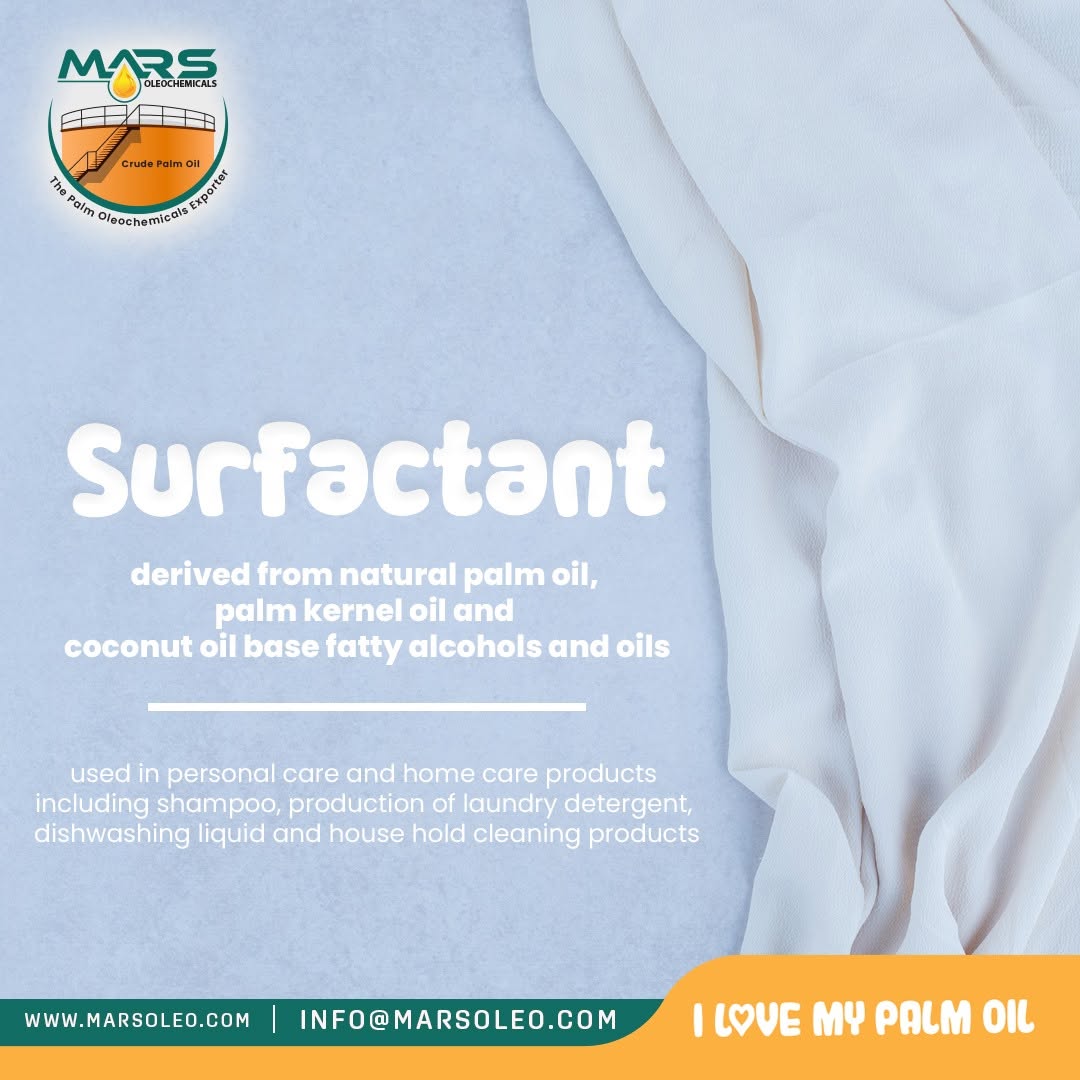
Surfactants are an important class of functional ingredients used extensively in personal care, household cleaning and industrial formulations. Many surfactants can be manufactured using fatty alcohols and other intermediates derived from vegetable-oil feedstocks such as palm oil, palm kernel oil and coconut oil.
surfactants can provide cleansing, foaming, wetting and emulsifying functions. They are widely used in shampoos, body washes, facial cleansers, hand washes and other rinse-off formulations.
The appropriate surfactant system depends on the desired cleansing strength, foam profile, mildness, viscosity, pH and compatibility with other ingredients. Formulators frequently combine different surfactant types to achieve the required finished-product performance.

Surfactants provide cleansing, foaming, wetting, and emulsifying performance in personal care and household formulations worldwide.
Home care formulations rely heavily on surfactants to remove oils, soils and particulate matter from surfaces and fabrics. Laundry detergents, dishwashing liquids and household cleaners use surfactants to improve wetting and enable oily soils to disperse more effectively into the cleaning solution.
Surfactant selection varies according to the application. Laundry, dishwashing and hard-surface cleaners may require different detergency, foam characteristics, water-hardness tolerance and compatibility with builders, fragrances and other formulation ingredients.
Mars Oleochemicals supplies surfactants and palm-based oleochemical ingredients for international personal care, home care and industrial requirements. The portfolio includes materials used across cleansing, detergent and formulation applications.
Commercial buyers can specify the required product, grade, specification, quantity, packaging and destination when requesting supply information. Selecting the appropriate surfactant grade is important for achieving the desired cleaning performance, foam profile and formulation stability.
What is a surfactant? A surfactant is a substance that reduces surface or interfacial tension, helping water interact more effectively with oils, soils and other materials.
What are surfactants used for? Surfactants are used for cleansing, wetting, foaming, emulsifying and dispersing in personal care, home care and industrial formulations.
Are surfactants used in shampoo? Yes. Surfactants are key cleansing ingredients in many shampoo formulations and can also contribute to foam and wetting performance.
Why are surfactants used in laundry detergents? Surfactants help wet fabrics, loosen oily soils and keep removed dirt dispersed in the wash solution.
Are surfactants used in dishwashing liquids? Yes. Dishwashing formulations use surfactants to help remove grease, food residues and other soils from dishes and utensils.
Can surfactants be derived from palm oil? Many surfactants can be manufactured from fatty alcohols and other intermediates derived from palm oil, palm kernel oil or other vegetable oils.
What is SLES 70 used for? SLES 70 is commonly used in shampoos, body washes, hand washes, liquid soaps and various detergent formulations.
What is CAPB used for? CAPB is commonly used in personal care and cleansing formulations to complement primary surfactants and support foam and mildness.
Does Mars Oleochemicals supply surfactants? Mars Oleochemicals supplies surfactants and related palm-based oleochemical ingredients for international commercial requirements.
How can buyers request a surfactant quotation? Buyers can provide their required product, grade, specification, quantity, packaging and destination to info@marsoleo.com.









Home :: Products :: Enquiry :: Contact Us :: Site Map
Copyright All Rights Reserved © 2025. Mars Oleochemicals :: Disclaimer :: Privacy Policy


