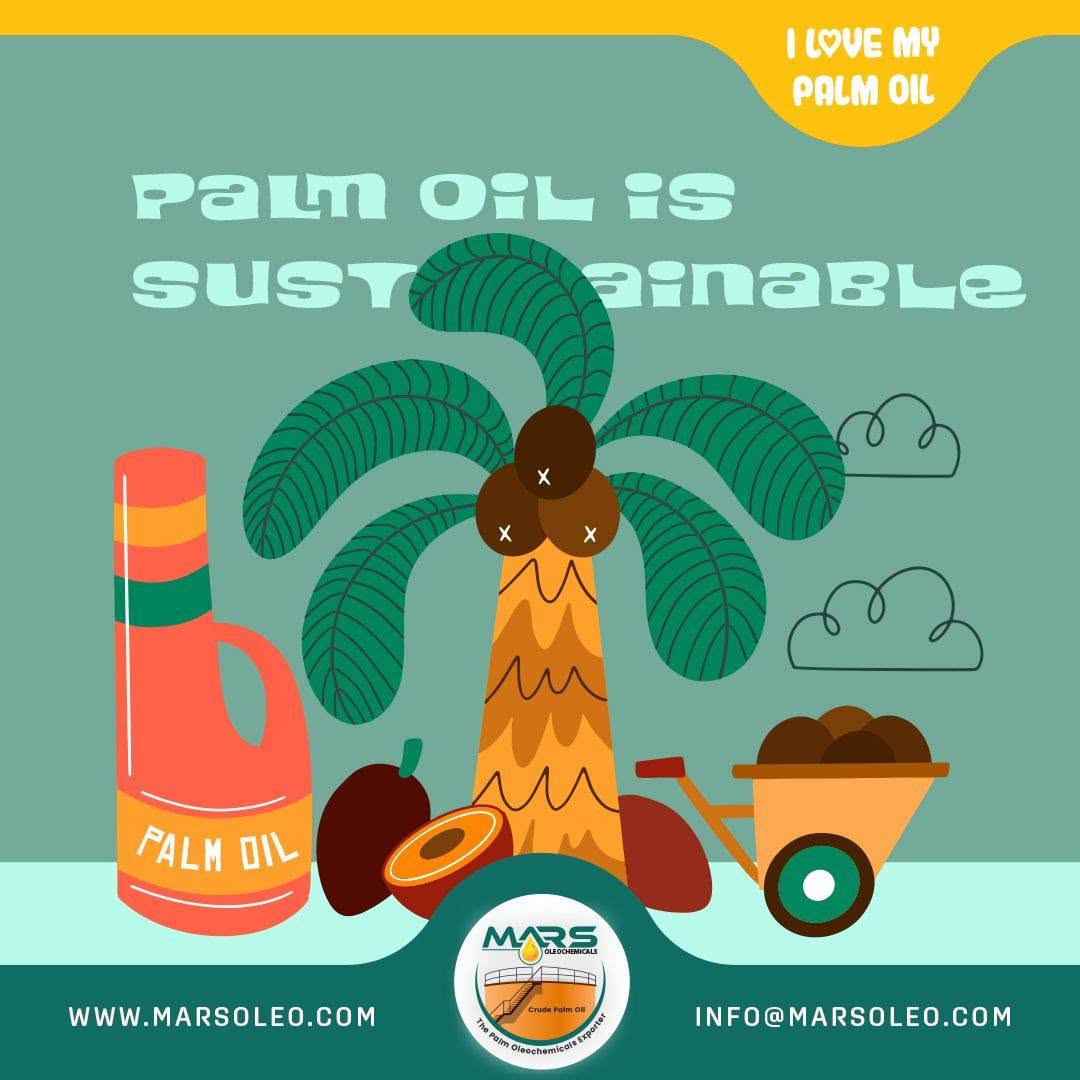
Sustainable Malaysian palm oil refers to palm oil produced and managed using environmental, social, economic and governance considerations throughout cultivation, processing and supply. Sustainability therefore involves more than the oil itself; it includes plantation practices, resource management, worker welfare, legal compliance, traceability and responsible supply-chain management. Malaysia's MSPO certification framework provides national requirements covering the palm-oil value chain.
The Malaysian Sustainable Palm Oil framework provides structured certification requirements for smallholders, plantations, mills, palm-oil processing facilities and dealers. MSPO 2.0 / MS 2530:2022 strengthened the previous standard and includes supply-chain requirements alongside environmental, social and governance considerations. Malaysia's eMSPO system also supports digital traceability and certification management.

Sustainable palm oil combines responsible production, traceability, governance and continuous improvement.
Palm oil and palm kernel oil can be processed into fundamental oleochemical building blocks including fatty acids, glycerine, fatty alcohols and other derivatives. Further processing produces surfactants, esters, soaps and specialised chemical ingredients. These materials serve home care, personal care, cosmetics, food, pharmaceutical and numerous industrial manufacturing applications.
Traceability helps manufacturers and buyers understand where palm-based materials originate and how they move through plantations, mills, processors and downstream supply chains. MSPO's current digital framework specifically incorporates traceability, certification, HCV, Social Impact Assessment and other compliance components, helping sustainability claims rely increasingly on documented evidence rather than broad marketing statements.
What is sustainable palm oil? Sustainable palm oil is palm oil produced and supplied using environmental, social, economic and governance considerations, supported by responsible management and traceability.
What is MSPO? MSPO stands for Malaysian Sustainable Palm Oil. It is Malaysia's national sustainability certification framework covering participants throughout the palm-oil supply chain.
What is MSPO 2.0? MSPO 2.0 refers to MS 2530:2022, the revised Malaysian Sustainable Palm Oil standard that replaced MS 2530:2013 and introduced broader sustainability requirements.
Does sustainable palm oil include traceability? Yes. Traceability is an important component of sustainable palm-oil supply chains. Malaysia's eMSPO system supports tracking palm-oil products from plantations through subsequent supply-chain stages.
Are palm oil and palm oleochemicals the same? No. Palm oil is primarily a vegetable oil composed of triglycerides, while palm oleochemicals are processed ingredients such as fatty acids, glycerine, fatty alcohols, surfactants and esters.
Which oleochemicals can be produced from palm-based feedstocks? Important categories include refined glycerine, fatty acids, fatty alcohols, stearic acid, surfactants, esters and soap ingredients.
Which industries use palm oleochemicals? Palm oleochemicals are used in personal care, cosmetics, soaps, detergents, food manufacturing, pharmaceuticals, rubber, plastics, lubricants, textiles and other industrial applications.
Is all palm oil automatically sustainable? No. Sustainability depends on production, environmental and social practices, traceability, governance and other supply-chain factors. Certification claims should only be made when supported by applicable documentation.
Does MSPO cover palm oil processing facilities? Yes. MS 2530-4-2:2022 specifically addresses palm-oil processing facilities and associated supply-chain requirements.




Home :: Products :: Enquiry :: Contact Us :: Site Map
Copyright All Rights Reserved © 2025. Mars Oleochemicals :: Disclaimer :: Privacy Policy