


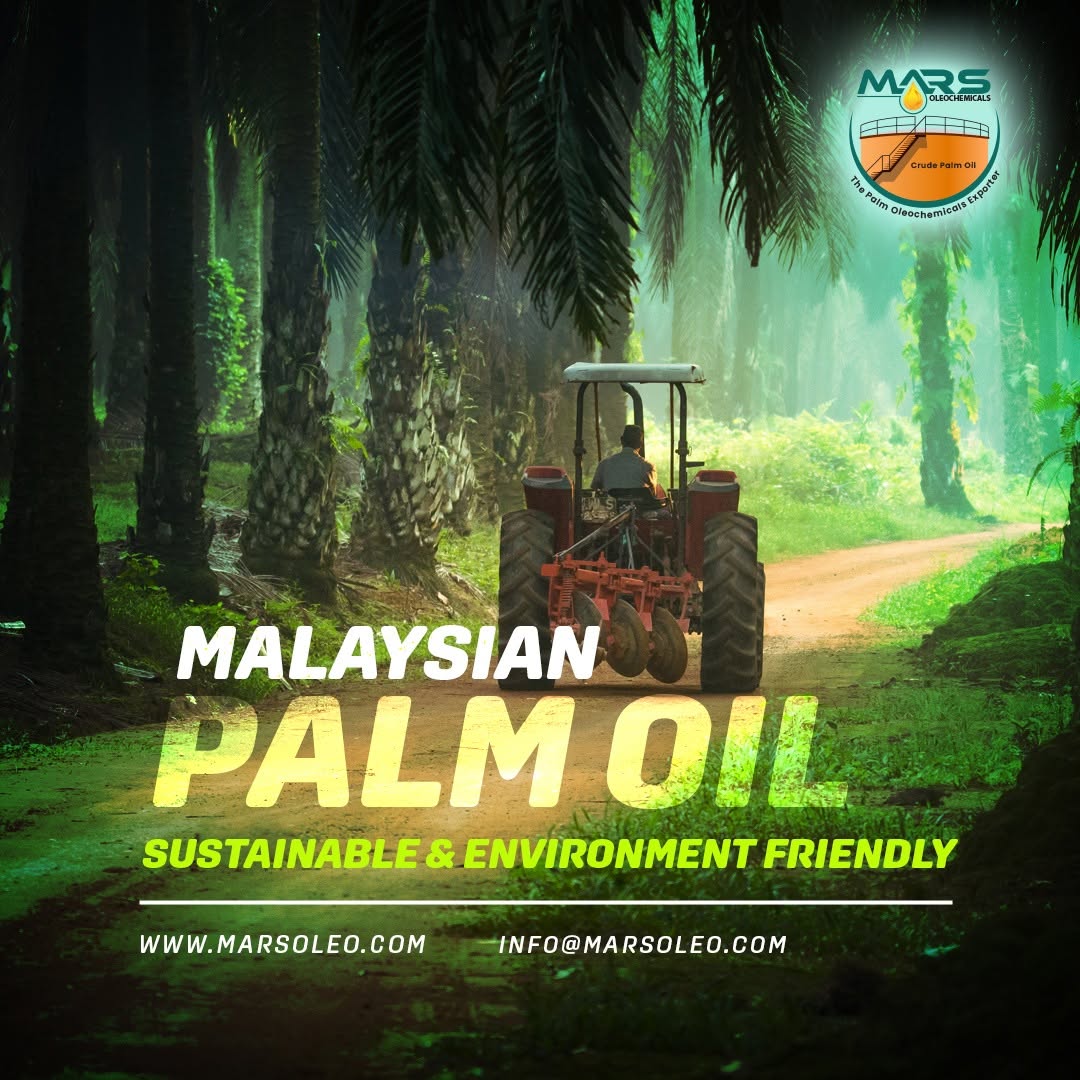
Malaysian palm oil forms part of a highly developed agricultural, refining and manufacturing industry supplying food, oleochemical and industrial markets worldwide. Sustainable palm-oil production increasingly focuses on responsible sourcing, traceability, improved plantation management and efficient use of natural resources.
Responsible oil-palm production can incorporate good agricultural practices, integrated pest management, appropriate soil and water management and reduced reliance on open burning. These measures can help producers improve long-term agricultural performance while managing environmental impacts more effectively.

Sustainable Malaysian palm oil combines responsible sourcing, efficient production and improved environmental management practices.
International buyers increasingly require greater transparency regarding the origin and production of agricultural commodities. Palm-oil traceability, sustainability documentation and appropriate certification can help companies evaluate suppliers and satisfy their own responsible-procurement requirements.
Not every palm-oil shipment has identical sustainability credentials, so buyers should review the specific origin, supplier documentation, traceability and certification applicable to their purchase. Mars Oleochemicals can support international commercial enquiries for Malaysian palm-oil products, with documentation requirements confirmed according to the specific transaction.
What is sustainable palm oil? Sustainable palm oil is produced and supplied using environmental, social and economic practices intended to reduce negative impacts and support responsible production.
Is all Malaysian Palm Oil sustainable? Sustainability should be assessed according to the specific plantation, mill, refinery, supplier, traceability and certification status rather than nationality alone.
What is responsible palm oil sourcing? Responsible sourcing involves evaluating the origin, suppliers, production practices, documentation, traceability and sustainability requirements associated with palm oil.
What is palm oil traceability? Palm oil traceability is the ability to track supply-chain information through facilities such as refineries and mills and, where available, upstream supplying sources.
What does zero burning mean in palm plantations? Zero-burning practices seek to avoid routine open burning of plantation biomass and instead use alternative management methods where appropriate.
What is Integrated Pest Management? Integrated Pest Management combines monitoring, biological, agricultural and targeted pest-control techniques to manage pests more efficiently.
Is palm oil land efficient? Oil palm can produce relatively high vegetable-oil yields per unit of cultivated land, although overall sustainability also depends on land-use history and management practices.
Why is traceability important for palm oil buyers? Traceability helps buyers understand product origin, assess sustainability requirements and perform supply-chain due diligence.
Can buyers request sustainable palm oil documentation? Yes. Buyers can request applicable sustainability, traceability or certification documentation, subject to the specific product and supply chain.



Home :: Products :: Enquiry :: Contact Us :: Site Map
Copyright All Rights Reserved © 2025. Mars Oleochemicals :: Disclaimer :: Privacy Policy


