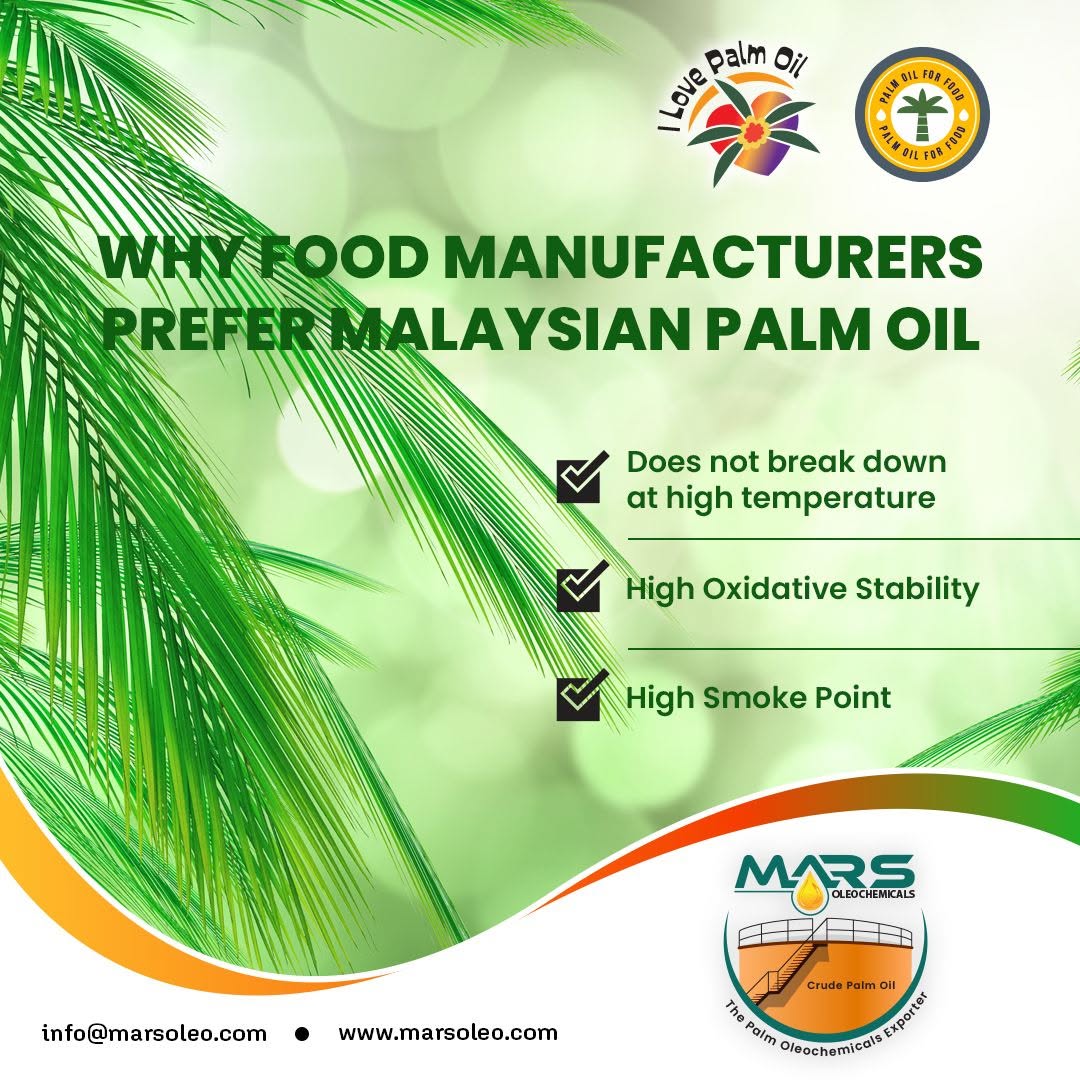
Malaysian palm oil is widely selected by food manufacturers because of its dependable performance during frying, baking and other heat-based production processes. Its naturally semi-solid characteristics and balanced fatty-acid composition help it remain functional under typical commercial food-processing conditions. This makes palm oil suitable for manufacturers seeking consistent texture, frying performance and process reliability across large production volumes.
Malaysian palm oil is its good oxidative stability. Oils with strong oxidative stability are less susceptible to deterioration when exposed to heat, air and extended storage conditions. In suitable formulations, this characteristic can help food manufacturers maintain product quality, manage shelf-life objectives and reduce undesirable changes in flavour, aroma and texture.

High-Performance Malaysian Palm Oil for Food Manufacturing by Mars Oleochemicals.
Refined palm oil and palm olein are commonly used in frying applications because they offer a relatively high smoke point and stable performance when handled correctly. They are suitable for producing fried snacks, instant noodles, potato products, bakery foods and other processed products. Actual frying performance depends on the oil grade, temperature, food composition, operating time and oil-management practices used by the manufacturer.
Malaysian palm oil is used in a broad range of food products because it provides functionality, availability and cost efficiency. It can contribute structure to shortenings, cream fillings, confectionery fats and bakery products while also serving as a frying or cooking medium. Mars Oleochemicals supplies Malaysian palm oil and palm-based ingredients to food manufacturers, distributors and importers requiring consistent quality and reliable international export support.
1. Why do food manufacturers use Malaysian palm oil? Food manufacturers use Malaysian palm oil because it offers useful heat stability, oxidative stability, texture, versatility and dependable availability for frying, bakery, confectionery and processed food applications.
2. Is Malaysian palm oil suitable for high-temperature frying? Refined palm oil and palm olein are commonly used for frying because they provide a relatively high smoke point and good stability. Manufacturers must still control frying temperature, oil quality and operating time.
3. What does oxidative stability mean in palm oil? Oxidative stability refers to the oil's ability to resist deterioration caused by heat, oxygen and storage. Better stability can help maintain flavour, aroma and overall product quality.
4. Which food products commonly use palm oil? Palm oil is used in instant noodles, fried snacks, bakery products, biscuits, confectionery, margarine, shortening, cream fillings, non-dairy creamers and many processed foods.
5. How can buyers request Malaysian palm oil from Mars Oleochemicals? Buyers can email info@marsoleo.com with the required product grade, quantity, packaging, destination port and technical specifications.











Home :: Products :: Enquiry :: Contact Us :: Site Map
Copyright All Rights Reserved © 2025. Mars Oleochemicals :: Disclaimer :: Privacy Policy