| Commercial Name | Lauryl Alcohol C12-99 |
|---|---|
| Product Name | Lauryl Alcohol / RSPO MB |
| Group of Chemicals | Fatty Alcohol |
| INCI / Common Name | 1-dodecanol / Dodecyl Alcohol, Lauryl Alcohol C1299, Lauryl Alcohol 99%, Fatty Alcohol C1299, Fatty Alcohol C12, C12-99 Alcohol |
| HS Code | 2905.17.0000 |
| CAS Number | 112-53-8 |
| EC Number | 203-982-0 |
| Lauryl Alcohol C12-99 - Specification | Lauryl Alcohol C12-99 - Specification |
| SDS - Safety Data Sheet | Lauryl Alcohol C12-99 SDS - Safety Data Sheet - MSDS |
| TDS - Technical Data Sheet | Lauryl Alcohol C12-99 TDS - Technical Data Sheet |
| COA - Certificate of Analysis | Lauryl Alcohol C12-99 COA - Certificate of Analysis |
| Recommended use of the chemical and restrictions on use | No further relevant information available. |
| Application of Lauryl Alcohol C12-99 | Lauryl Alcohol C12-99 is a high-purity fatty alcohol widely used in personal care, surfactants, and industrial formulations. Derived from natural palm or coconut sources, it acts as an effective emollient, emulsifier, and cleansing agent, making it ideal for shampoos, body washes, liquid soaps, and cosmetic creams. Its excellent foaming, conditioning, and moisturizing properties enhance product performance while maintaining skin compatibility. Lauryl Alcohol C12-99 is also a key raw material in the production of detergents, sulfates, and ethoxylates, supporting a broad range of oleochemical and chemical applications. |
| Details of the Manufacturer/Supplier | Mars Oleochemicals Sdn Bhd® |
| Kuala Lumpur, Malaysia | |
| Contact Person | Safety and Health Manager - Officer / Quality Control Manager - Chemist |
| info@marsoleo.com | |
| Telephone | +60 3 21175031 |
| Classification of substance or mixture | |
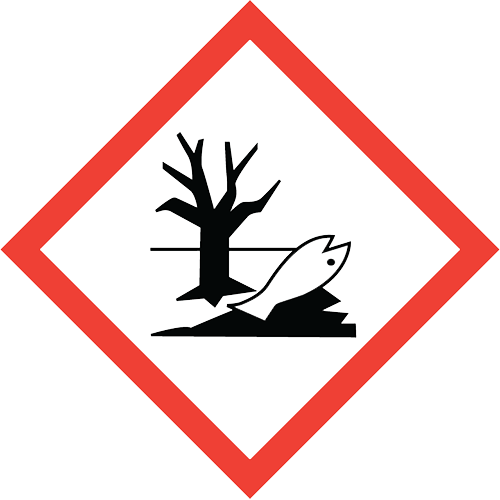
| Environment |
|
| Aquatic Acute 1 | H400 Very toxic to aquatic life. |
| Aquatic Chronic 2 | H411 Toxic to aquatic life with long lasting effects. |
| Eye Contact |

|
| Eye Irrit. 2 | H319 Causes serious eye irritation. |
| Label Elements | |
|---|---|
| GHS label elements | The substance is classified and labelled according to the Globally Harmonized System (GHS). |
| Hazard pictograms |
GHS07
GHS09
|
| Signal word | Warning |
| Hazard statements | Causes serious eye irritation. Very toxic to aquatic life. Toxic to aquatic life with long lasting effects. |
| Precautionary Statements | |
| Wash thoroughly after handling. Avoid release to the environment. Wear eye protection / face protection. | |
| IF IN EYES | Rinse cautiously with water for several minutes. Remove contact lenses, if present and easy to do. Continue rinsing. |
| If eye irritation persists: Get medical advice/attention. | |
| Collect spillage. | |
| Dispose of contents/container in accordance with local/regional/national/international regulations. | |
| Other hazards Results of PBT and vPvB assessment | |
| Results of PBT assessment | This product is not classified as PBT. |
| Results of vPvB assessment | This product is not classified as vPvB. |
| General Chemical Description | Lauryl Alcohol C12-99 | |||
| Chemical Family | Fatty Alcohol | |||
| Chemical Name | Lauryl Alcohol, 1-dodecanol / Dodecyl Alcohol, Lauryl Alcohol 99% | |||
| Molecular Formula | C12H26O | |||
| H.S Code | 2905.17.0000 | |||
| CAS No. | 112-53-8 | |||
| EC number | 203-982-0 | |||
| Dangerous Components | ||||
| Chemical Name | CAS Number | EINECS Number | % | |
|---|---|---|---|---|
| Dodecan-1-ol | 112-53-8 | 203-982-0 | Aquatic Acute 1, H400; Aquatic Chronic 2, H411; Eye Irrit. 2, H319 | 100% |
| General Information | Immediately remove any clothing soiled by the product. |
| After Inhalation | Supply fresh air; consult doctor in case of complaints. |
| After Skin contact | Immediately wash with water and soap and rinse thoroughly. If skin irritation continues, consult a doctor. |
| After Eye contact | Rinse opened eye for several minutes under running water. If symptoms persist, consult a doctor. |
| After Swallowing | Call a doctor immediately. Do not induce vomiting; call for medical help immediately. Rinse out mouth and then drink plenty of water. |
| Information for Doctor | |
|---|---|
| Most important symptoms and effects, both acute and delayed | No further relevant information available. |
| Indication of any immediate medical attention and special treatment needed | No further relevant information available. |
| Extinguishing Media | |
|---|---|
| Suitable extinguishing agents | Sand, CO2, powder or water spray. Fight larger fires with water spray or alcohol resistant foam. Use fire extinguishing methods suitable to surrounding conditions. |
| For safety reasons unsuitable extinguishing agents | Water with full jet |
| Special hazards arising from the substance or mixture | Under certain fire conditions, traces of other toxic gases cannot be excluded. |
| Advice for firefighters | |
| Protective equipment | Do not inhale explosion gases or combustion gases. Wear self-contained respiratory protective device. Wear fully protective suit. |
| Personal precautions, protective equipment and emergency procedures | Wear protective clothing and equipment. Keep unprotected persons away. Use respiratory protective device against the effects of fumes / dust / aerosol. |
| Environmental precautions | Do not allow product to reach sewage system or any water course. |
| Methods and material for containment and cleaning u | Absorb with liquid-binding material (sand, diatomite, acid binders, universal binders, sawdust). Dispose contaminated material as waste according to section 13. |
| Reference to other sections |
See Section 7 for information on safe handling. See Section 8 for information on personal protection equipment. See Section 13 for disposal information. |
| Precautions for safe handling | Ensure good ventilation/exhaustion at the workplace. Store in cool, dry place in tightly closed receptacles. Keep receptacles tightly sealed. Keep away from heat and direct sunlight. |
| Information about fire - and explosion protection | Keep ignition sources away - Do not smoke. Keep respiratory protective device available. |
| Conditions for safe storage, including any incompatibilities | |
|---|---|
| Information about storage in one common storage facility | Store away from oxidizing agents. |
| Requirements to be met by storerooms and receptacles | Store only in the original receptacle. |
| Further information about storage conditions | Keep container tightly sealed. Protect from heat and direct sunlight. |
| Specific end use(s) | No further relevant information available. |
| Additional information about design of technical facilities | No further data; see section 7 | |
| Control Parameters | ||
|---|---|---|
| Ingredients with limit values that require monitoring at the workplace | Not required. | |
| Exposure Controls | ||
| Exposure Controls Appropriate | ||
| Personal protective equipment | ||
| General protective and hygienic measures | Keep away from foodstuffs, beverages and feed. Immediately remove all soiled and contaminated clothing. Be sure to clean skin thoroughly after work and before breaks. Avoid contact with the eyes and skin. | |
| Respiratory protection | Suitable respiratory protective device recommended. | |
| Protection of hands | Protective Gloves : The glove material has to be impermeable and resistant to the product/ the substance/ the preparation. | |
| Material of Gloves : The selection of the suitable gloves does not only depend on the material, but also on further marks of quality and varies from manufacturer to manufacturer. |

|
|
| Penetration time of glove material : The exact break through time has to be found out by the manufacturer of the protective gloves and has to be observed. | ||
| Eye protection | Tightly sealed goggles |

|
| Parameter | Value |
|---|---|
| Chemical Name | Lauryl Alcohol |
| Appearance: Form | Liquid |
| Colour | Colourless |
| Odour | Characteristic |
| Odour threshold | Not Determined. |
| pH Value | Not Determined. |
| Change in Condition | |
| Melting point/freezing point | ca. 26 °C |
| Boiling point/boiling range | ca. 229 °C (at 101.3hPa) |
| Flammability (solid, gas) | Not applicable. |
| Auto-ignition Temp. | Not determined. |
| Flash point | ca. 135 °C (at 101.3kPa, PMCC) |
| Decomposition temperature | Not Determined |
| Explosive properties | Product does not present an explosion hazard. |
| Lower Explosion Limit | Not Determined |
| Upper Explosion Limit | Not Determined |
| Vapour pressure at 38 °C | ca. 0.021 mBar |
| Density at 20 °C | ca. 0.83 g/cm³ (ASTM D4052-09) |
| Relative Density at 24 °C | 0.83 (CRC Handbook) |
| Vapour Density | Not determined |
| Evaporation rate | Not determined |
| Solubility in/Miscibility with water at 23 °C | ca. 1 mg/L (ASTM E1148) |
| Partition coefficient : n-octanol/water at 23 °C | ca. 5.4 log Kow (OECD 117) |
| Viscosity | |
| Viscosity Dynamic at 25 °C | 0.0049 cP (ASTM D 445-65) |
| Kinematic | Not Determined |
| Reactivity | No further relevant information available. |
| Chemical stability | Stable at environment temperature. |
| Thermal decomposition / conditions to be avoided | No decomposition if used according to specifications. |
| Possibility of hazardous reactions | Violent reactions possible with: Strong alkalis, strong oxidizing agents, acid chlorides, acid anhydrides. |
| Conditions to avoid | See Section 7 for information of safe handling. |
| Incompatible materials | See Section 7 for information of safe handling. |
| Hazardous decomposition products |
Irritant gases / vapours Carbon monoxide and carbon dioxide |
| Information on toxicological effects Acute toxicity | |||
|---|---|---|---|
| LD/LC50 values relevant for classification | |||
| 112-53-8 dodecan-1-ol | Oral | LD50 | > 2,000 mg/kg bw (Rat, Sprague-Dawley) (OECD 401, CAS # 112-53-8) |
| Dermal | LD50 | 8,000-12,000 mg/kg bw (rabbit) (OECD 403, CAS # 112-53-8) | |
| Inhalative | LC50 (1h) | > 71 mg/L air (Rat) (RA 1-Decanol, CAS # 112-30-1) | |
| Primary Irritant Effect | |||
| Skin corrosion / irritation | Based on available data, the classification criteria are not met. | ||
| 112-53-8 dodecan-1-ol | Irritation of skin | Skin corrosion / irritation | (hum) (Erythema score: 0, OECD 404, CAS # 112-53-8) |
| Serious eye damage / irritation | Irritating effect. | ||
| 112-53-8 dodecan-1-ol | Irritation of eyes | Eye damage / irritation | (rabbit) (MMTS: 26.7, OECD 405, CAS # 112-53-8) |
| Respiratory or skin sensitization | Based on available data, the classification criteria are not met. | ||
| 112-53-8 dodecan-1-ol | Sensitisation | Sensitisation | (Guinea pig) (OECD 406 (None Sensitizer)) |
| Additional Toxicological Information | |||
| Repeated dose toxicity | |||
| 112-53-8 dodecan-1-ol | Oral | NOAEL | 2,000 mg/kg bw/day (Rat, Wistar) (OECD 422, CAS # 112-53-8) |
| Toxicity | ||
|---|---|---|
| Aquatic Toxicity | ||
| 112-53-8 dodecan-1-ol | EC50 (48h) | 0.765 mg/kg (Daphnia magna) (DIN 38412, CAS 112-53-8) |
| LC50 (96h) | 1.01 mg/L (Fish, Pimephales promelas) (US EPA 1975, CAS # 112-53-8) | |
| NOEC (72h) | 0.085 mg/L (Algae, Desmodesmus subspicatus) (OECD 201, CAS # 112-53-8) | |
| Persistence and Degradability | Easily biodegradable | |
| Other information | CAS No. 112-53-8: | |
| OECD Guideline 301 D (Ready Biodegradability: Closed Bottle Test) | ||
| 79% degradation after 28 days. | ||
| Behavior in Environmental Systems | ||
| Bio accumulative Potential | Does not accumulate in organisms | |
| Mobility in Soil | No further relevant information available. | |
| Ecotoxical Effects | ||
| Remark | Very toxic for fish | |
| Additional Ecological Information | ||
| General notes | Do not allow product to reach ground water, water course or sewage system. Danger to drinking water if even small quantities leak into the ground. Very toxic for aquatic organisms. Also poisonous for fish and plankton in water bodies. | |
| Result of PBT and vPvB Assessment | ||
| PBT | Not Applicable | |
| vPvB | Not Applicable | |
| Other Adverse Effects | No further relevant information available. | |
| Waste treatment methods Recommendatio | Must be specially treated adhering to official regulations. |
| Uncleaned Packaging Recommendation | Disposal must be made according to official regulations. |
| UN-Number | UN3082 |
| ADR / RID / ADN, IMDG, IATA | |
| UN Proper Shipping Name | 3082 ENVIRONMENTALLY HAZARDOUS SUBSTANCE, LIQUID, N.O.S. (dodecan-1-ol) |
| ADN | |
| IMDG, IATA | ENVIRONMENTALLY HAZARDOUS SUBSTANCE, LIQUID, N.O.S. (dodecan-1-ol) |
| Transport Hazard class(es) | |
|---|---|
| ADR / RID / ADN, IMDG, IATA |

|
| Class | 9 Miscellaneous dangerous substances and articles. |
| Label | 9 |
| Packing Group | |
| ADR / RID / ADN, IMDG, IATA | III |
| Environmental Hazards | |
| Marine Pollutant | Symbol (fish and tree) |
| Special marking (ADR/RID/ADN) | Symbol (fish and tree) |
| Special marking (IATA) | Symbol (fish and tree) |
| Special Precautions for User | Warning : Miscellaneous dangerous substances and articles. |
| EMS number | F-A,S-F |
| Stowage Category | A |
| Maritime Transport in Bulk Annex II of MARPOL 73/78 and the IBC Code | Product name : Dodecyl Alcohol |
| Pollution category : Y | |
| Ship type : 2 | |
| Transport / Additional Information | |
| ADR / RID / AND | 5L |
| Limited quantities (LQ) | Code : E1 |
| Excepted quantities (EQ) | Maximum net quantity per inner packaging: 30 ml |
| Maximum net quantity per outer packaging: 1000 ml | |
| IMDG | 5L |
| Limited quantities (LQ) | Code: E1 |
| Excepted quantities (EQ) | Maximum net quantity per inner packaging: 30 ml |
| Maximum net quantity per outer packaging: 1000 ml | |
| UN "Model Regulation" | UN 3082 ENVIRONMENTALLY HAZARDOUS SUBSTANCE, LIQUID, N.O.S. (DODECAN-1-OL), 9, III |
| Safety, health and environmental regulations / legislation specific for the substance or mixture | ||
| EHS reference list | Substance is not listed. | |
| GHS label elements | The product is classified and labelled according to the Globally Harmonised System (GHS). | |
| Hazard pictograms |
GHS07
GHS09
|
|
| Signal word | Warning | |
| Hazard statements | Causes serious eye irritation. Very toxic to aquatic life. Toxic to aquatic life with long lasting effects. | |
| Precautionary statements | ||
| Wash thoroughly after handling. | ||
| Avoid release to the environment. | ||
| Wear eye protection / face protection. | ||
| IF IN EYES: Rinse cautiously with water for several minutes. Remove contact lenses, if present and easy to do. Continue rinsing. | ||
| If eye irritation persists: Get medical advice/attention. | ||
| Collect spillage. | ||
| Dispose of contents/container in accordance with local / regional / national / international regulations. | ||
| Directive 2012/18/EU | Substance is not listed. | |
| Named dangerous substances - ANNEX I | ||
| Seveso category | E1 Hazardous to the Aquatic Environment | |
| Qualifying quantity (tonnes) for the application of lower-tier requirements | 100 t | |
| Qualifying quantity (tonnes) for the application of lower-tier requirements | 100 t | |
| Other regulations, limitations and prohibitive regulations | ||
| Positive Country Substance Listing for 1-Dodecanol CAS No. 112-53-8 | USA (TSCA), Canada (DSL), Europe (EINECS): 203-53-8, Japan (ENCS): 2-217, Australia (AIIC), China (IECSC): 30481, China (IECIC): 08273, Philippines (PICCS), New Zealand (NZIoC), Taiwan (TCSI), Mexico (INSQ), Vietnam (VNCI), Thailand (TECI). | |
| Note | The substance name and CAS numbers which are used for this product in the stated inventories may deviate from the information listed in Section 3. | |
| Chemical safety assessment | A Chemical Safety Assessment has been carried out. | |
| The information provided in this Safety Data sheet is correct to the best of Mars Oleochemicals knowledge, information and belief at the date of its publication. The information given is designed only as guidance for safe handling, use, processing, storage, transportation, disposal and release, and is not to be considered a warranty or quality specification. The information relates only to the specific product designated and may not be valid for such product when used in combination with any other material or in any process, unless specified in this SDS. MARS OLEO specifically disclaims any liability for any loss, injury or damage which may result from user or misuse of this product. | |
| All chemicals should be handled only by competent personnel, within a controlled environment. It is the buyers / user's responsibility to ensure that his activities comply with all applicable federal, state, provincial and local laws, and to determine the conditions necessary for the safe user of this product. MARS OLEOCHEMICALS urges each customer or recipient of this SDS to study it carefully and consult appropriate expertise, as necessary or appropriate, to become aware of and understand the data contained in this SDS and any hazards associated with the product. | |
| Abbreviations and Acronyms | |
|---|---|
| RID | Règlement international concernant le transport des marchandises dangereuses par chemin de fer (Regulations Concerning the International Transport of Dangerous Goods by Rail) |
| ICAO | International Civil Aviation Organisation |
| NOAEL | No Observed Adverse Effect Level |
| RA | Read-across |
| LDLo | Lowest Published Lethal Dose |
| VOID | Not regulated / Not Classified / Not a Dangerous Good |
| LoS | Limit of Solubility |
| COS | Cornea Opacity Score |
| COC | Cleveland Open Cup |
| ADR | Accord relatif au transport international des merchandises danger uses par route (European Agreement Concerning the International Carriage of Dangerous Goods by Road) |
| IMDG | International Maritime Code for Dangerous Goods |
| IATA | International Air Transport Association |
| EINECS | European Inventory of Existing Commercial Chemical Substances |
| ELINCS | European List of Notified Chemical Substances |
| CAS | Chemical Abstracts Service (division of the American Chemical Society) |
| LC50 | Lethal concentration, 50 percent |
| LD50 | Lethal dose, 50 percent |
| PBT | Persistent, Bioaccumulative and Toxic |
| vPvB | very Persistent and very Bioaccumulative |
| Eye Irrit. 2 | Serious eye damage or eye irritation - Category 2 |
| Aquatic Acute 1 | Hazardous to the aquatic environment - acute hazard - Category 1 |
| Aquatic Chronic 2 | Hazardous to the aquatic environment - chronic hazard - Category 2 |
| Sources |
|---|
| ECHA Registered Substances Database, CAS No. 80206-82-2. GB 30000.1-2024 Specification for classification and labelling of chemicals - Part 1:General rules, (GHS 8th Revised Edition). |
| GB/T 16483-2008 Safety Data Sheet for Chemical Products Content and Order of Sections. |
| GB/T 17519-2013 Guidance on the compilation of safety data sheet for chemical products. |
| Globally Harmonized System of Classification and Labelling of Chemicals (GHS), Eight Revised Edition. |
| ICOP (2014). The Industry Code of Practice on Chemical Classification and Hazard Communication. |
| ICOP (2019). The Industry Code of Practice on Chemical Classification and Hazard Communication (Amendment). |
| IMO (2024). IMDG Code International Maritime Dangerous Goods Code. Incorporating Amendment 42-24. |
| Official Journal of the European Union Commission Regulation (EU) No 453/2010. |
| Official Journal of the European Union Commission Regulation (EU) 2015/830. |
| Official Journal of the European Union Commission Regulation (EU) 2020/878. |
| Official Journal of the European Union Regulation (EC) No 1272/2008. |
| Official Journal of the European Union Regulation (EC) No 1907/2006. |
| P.U. (A) 310/2013. Occupational Safety Health (Classification, Labelling and Safety Data Sheet of Hazardous Chemicals) Regulations. |
| Data Compared to the Previous Version Altered. |
|---|
|
MARS OLEOCHEMICALS® Revision 1 (Mar 31, 2023) New issuance of GHS SDS according to ChemGes. Revision 2 (January 01, 2025) |
| Department issuing SDS : Product Safety & Regulations Department |
| Contact : Product Safety & Regulations - sales@marsoleo.com |
| SDS Updated Date : 1 Jan 2025 |
| SDS Creation Date : 31 March 2023 |
| Version : 2.00 |
| Disclaimer : This Safety Data Sheet does not constitute any warranty or guarantee as to the quality, properties, condition or otherwise of the product. It has been prepared from the best knowledge available to us and we shall not be liable for any insufficiency or inaccuracy in such information in any case whatsoever. |

Home :: Products :: Enquiry :: Contact Us :: Site Map
Copyright All Rights Reserved © 2025. Mars Oleochemicals :: Disclaimer :: Privacy Policy